
Publications

2018

Akhtari, Chuang M, Salton C, Berg, Kissinger K, Goddu, O’Donnell C, Manning W. Effect of isolated left bundle-branch block on biventricular volumes and ejection fraction: a cardiovascular magnetic resonance assessment. J Cardiovasc Magn Reson. 2018;20(66).

BACKGROUND:

Left bundle branch block (LBBB) is associated with abnormal left ventricular (LV) contraction, and is frequently associated with co-morbid cardiovascular disease, but the effect of an isolated (i.e. in the absence of cardiovascular dissease) LBBB on biventricular volumes and ejection fraction (EF) is not well characterized. The objective of this study was to compare LV and right ventricular (RV) volumes and EF in adults with an isolated LBBB to matched healthy controls and to population-derived normative values, using cardiovascular magnetic resonance (CMR) imaging.

METHODS:

We reviewed our clinical echocardiography database and the Framingham Heart Study Offspring cohort CMR database to identify adults with an isolated LBBB. Age-, sex-, hypertension-status, and body-surface area (BSA)-matched controls were identified from the Offspring cohort. All study subjects were scanned using the same CMR hardware and imaging sequence. Isolated-LBBB cases were compared with matched controls using Wilcoxon paired signed-rank test, and to normative reference values via Z-score.

RESULTS:

Isolated-LBBB subjects (n = 18, 10F) ranged in age from 37 to 82 years. An isolated LBBB was associated with larger LV end-diastolic and end-systolic volumes (both p < 0.01) and lower LVEF (56+/- 7% vs. 68+/- 6%; p  <0.001) with similar myocardial contraction fraction. LVEF in isolated LBBB was nearly two standard deviations (Z = - 1.95) below mean sex and age-matched group values. LV stroke volume, cardiac output, and mass, and all RV parameters were similar (p = NS) between the groups.

CONCLUSIONS:

Adults with an isolated LBBB have greater LV volumes and markedly reduced LVEF, despite the absence of overt cardiovascular disease. These data may be useful toward the clinical interpretation of imaging studies performed on patients with an isolated LBBB.
Choi S, Han SI, Jung D, Hwang HJ, Lim C, Bae S, Park OK, Tschabrunn CM, Lee M, Bae SY, Yu JW, Ryu JH, Lee SW, Park K, Kang PM, Lee WB, Nezafat R, Hyeon T, Kim DH. Highly conductive, stretchable and biocompatible Ag-Au core-sheath nanowire composite for wearable and implantable bioelectronics. Nature Nanotechnology. 2018;
Wearable and implantable devices require conductive, stretchable and biocompatible materials. However, obtaining composites that simultaneously fulfil these requirements is challenging due to a trade-off between conductivity and stretchability. Here, we report on Ag–Au nanocomposites composed of ultralong gold-coated silver nanowires in an elastomeric block-copolymer matrix. Owing to the high aspect ratio and percolation network of the Ag–Au nanowires, the nanocomposites exhibit an optimized conductivity of 41,850 S cm−1 (maximum of 72,600 S cm−1). Phase separation in the Ag–Au nanocomposite during the solvent-drying process generates a microstructure that yields an optimized stretchability of 266% (maximum of 840%). The thick gold sheath deposited on the silver nanowire surface prevents oxidation and silver ion leaching, making the composite biocompatible and highly conductive. Using the nanocomposite, we successfully fabricate wearable and implantable soft bioelectronic devices that can be conformally integrated with human skin and swine heart for continuous electrophysiological recording, and electrical and thermal stimulation.
BACKGROUND: Recent studies demonstrated a strong association between atrial fibrillation (AF) and epicardial fat around the left atrium (LA). We sought to assess whether epicardial fat volume around the LA is associated with AF, and to determine the additive value of LA-epicardial fat measurements to LA structural remodeling for identifying patients with AF using 3-dimensional multi-echo Dixon fat-water separated cardiovascular magnetic resonance. METHODS AND RESULTS: A total of 105 subjects were studied: 53 patients with a history of AF and 52 age-matched patients with other cardiovascular diseases but no history of AF. The 3-dimensional multi-echo Dixon fat-water separated sequence was performed for LA-epicardial fat measurements. AF patients had significantly greater LA-epicardial fat (28.9±12.3 and 14.2±7.3 mL for AF and non-AF, respectively; <0.001) and LA volume (110.8±38.2 and 89.7±30.3 mL for AF and non-AF, respectively; =0.002). LA-epicardial fat adjusted for LA volume was still higher in patients with AF compared with those without AF (<0.001). LA-epicardial fat and hypertension were independently associated with the risk of AF (odds ratio, 1.17; 95% confidence interval, 1.10%-1.25%, <0.001, and odds ratio, 3.29; 95% confidence interval, 1.17%-9.27%, =0.03, respectively). In multivariable logistic regression analysis adjusted for body surface area, LA-epicardial fat remained significant and an increase per mL was associated with a 42% increase in the odds of AF presence (odds ratio, 1.42; 95% confidence interval, 1.23%-1.62%, <0.001). Combined assessment of LA-epicardial fat and LA volume provided greater discriminatory performance for detecting AF than LA volume alone (c-statistic=0.88 and 0.74, respectively, DeLong test; <0.001). CONCLUSIONS: Cardiovascular magnetic resonance 3-dimensional Dixon-based LA-epicardial fat volume is significantly increased in AF patients. LA-epicardial fat measured by 3-dimensional Dixon provides greater performance for detecting AF beyond LA structural remodeling.
Wang C, Jang J, Neisius U, Nezafat M, Fahmy A, Kang J, Rodriguez J, Goddu B, Pierce P, Berg S, Zhang J, Wang X, Nezafat R. Black blood myocardial T2 mapping. Magn Reson Med. 2018;
PURPOSE: To develop a black blood heart-rate adaptive T -prepared balanced steady-state free-precession (BEATS) sequence for myocardial T mapping. METHODS: In BEATS, blood suppression is achieved by using a combination of preexcitation and double inversion recovery pulses. The timing and flip angles of the preexcitation pulse are auto-calculated in each patient based on heart rate. Numerical simulations, phantom studies, and in vivo studies were conducted to evaluate the performance of BEATS. BEATS T maps were acquired in 36 patients referred for clinical cardiac MRI and in 1 swine with recent myocardial infarction. Two readers assessed all images acquired in patients to identify the presence of artifacts associated with slow blood flow. RESULTS: Phantom experiments showed that the BEATS sequence provided accurate T values over a wide range of simulated heart rates. Black blood myocardial T maps were successfully obtained in all subjects. No significant difference was found between the average T measurements obtained from the BEATS and conventional bright-blood T ; however, there was a decrease in precision using the BEATS sequence. A suppression of the blood pool resulted in sharper definition of the blood-myocardium border and reduced partial voluming effect. The subjective assessment showed that 16% (18 out of 108) of short-axis slices have residual blood artifacts (12 in the apical slice, 4 in the midventricular slice, and 2 in the basal slice). CONCLUSION: The BEATS sequence yields dark blood myocardial T maps with better definition of the blood-myocardium border. Further studies are warranted to evaluate diagnostic accuracy of black blood T mapping.
Hosny A, Keating SJ, Dilley JD, Ripley B, Kelil T, Pieper S, Kolb D, Bader C, Pobloth AM, Griffin M, Nezafat R, Duda G, Chiocca EA, Stone JR, Michaelson JS, Dean MN, Oxman N, Weaver JC. From Improved Diagnostics to Presurgical Planning: High-Resolution Functionally Graded Multimaterial 3D Printing of Biomedical Tomographic Data Sets. 3D Printing and Additive Manufacturing. 2018;5(2).
Three-dimensional (3D) printing technologies are increasingly used to convert medical imaging studies into tangible (physical) models of individual patient anatomy, allowing physicians, scientists, and patients an unprecedented level of interaction with medical data. To date, virtually all 3D-printable medical data sets are created using traditional image thresholding, subsequent isosurface extraction, and the generation of .stl surface mesh file formats. These existing methods, however, are highly prone to segmentation artifacts that either over or underexaggerate the features of interest, thus resulting in anatomically inaccurate 3D prints. In addition, they often omit finer detailed structures and require time- and labor-intensive processes to visually verify their accuracy. To circumvent these problems, we present a bitmap-based multimaterial 3D printing workflow for the rapid and highly accurate generation of physical models directly from volumetric data stacks. This workflow employs a thresholding-free approach that bypasses both isosurface creation and traditional mesh slicing algorithms, hence significantly improving speed and accuracy of model creation. In addition, using preprocessed binary bitmap slices as input to multimaterial 3D printers allows for the physical rendering of functional gradients native to volumetric data sets, such as stiffness and opacity, opening the door for the production of biomechanically accurate models.
Fahmy A, Neisius U, Tsao C, Berg S, Goddu E, Pierce P, Basha T, Ngo L, Manning W, Nezafat R. Gray blood late gadolinium enhancement cardiovascular magnetic resonance for improved detection of myocardial scar. J Cardiovasc Magn Reson. 2018;

Background

Low scar-to-blood contrast in late gadolinium enhanced (LGE) MRI limits the visualization of scars adjacent to the blood pool. Nulling the blood signal improves scar detection but results in lack of contrast between myocardium and blood, which makes clinical evaluation of LGE images more difficult.

Methods

GB-LGE contrast is achieved through partial suppression of the blood signal using T2magnetization preparation between the inversion pulse and acquisition. The timing parameters of GB-LGE sequence are determined by optimizing a cost-function representing the desired tissue contrast. The proposed 3D GB-LGE sequence was evaluated using phantoms, human subjects (n = 45) and a swine model of myocardial infarction (n = 5). Two independent readers subjectively evaluated the image quality and ability to identify and localize scarring in GB-LGE compared to black-blood LGE (BB-LGE) (i.e., with complete blood nulling) and conventional (bright-blood) LGE.

Results

GB-LGE contrast was successfully generated in phantoms and all in-vivo scans. The scar-to-blood contrast was improved in GB-LGE compared to conventional LGE in humans (1.1 ± 0.5 vs. 0.6 ± 0.4, P < 0.001) and in animals (1.5 ± 0.2 vs. -0.03 ± 0.2). In patients, GB-LGE detected more tissue scarring compared to BB-LGE and conventional LGE. The subjective scores of the GB-LGE ability for localizing LV scar and detecting papillary scar were improved as compared with both BB-LGE (P < 0.024) and conventional LGE (P < 0.001). In the swine infarction model, GB-LGE scores for the ability to localize LV scar scores were consistently higher than those of both BB-LGE and conventional-LGE.

Conclusion

GB-LGE imaging improves the ability to identify and localize myocardial scarring compared to both BB-LGE and conventional LGE. Further studies are warranted to histologically validate GB-LGE.

Whitaker J, Tschabrunn C, Jang J, Eran L, O’Neill M, Manning W, Anter E, Reza N. Cardiac MR Characterization of left ventricular remodeling in a swine model of infarct followed by reperfusion. J Magn Reson Imaging. 2018;

BACKGROUND:

Myocardial infarction (MI) survivors are at risk of complications including heart failure and malignant arrhythmias.

PURPOSE:

We undertook serial imaging of swine following MI with the aim of characterizing the longitudinal left ventricular (LV) remodeling in a translational model of ischemia-reperfusion-mediated MI.

ANIMAL MODEL:

Eight Yorkshire swine underwent mid left anterior descending coronary artery balloon occlusion to create an ischemia-reperfusion experimental model of MI.

FIELD STRENGTH/SEQUENCES:

1.5T Philips Achieva scanner. Serial cardiac MRI was performed at 16, 33, and 62 days post-MI, including cine imaging, native and postcontrast T1 , T2 and dark-blood late gadolinium enhanced (DB-LGE) scar imaging.

ASSESSMENT:

Regions of interest were selected on the parametric maps to assess native T1 and T2 in the infarct and in remote tissue. Volume of enhanced tissue, nonenhanced tissue, and gray zone were assessed from DB-LGE imaging. Volumes, cardiac function, and strain were calculated from cine imaging.

STATISTICAL TESTS:

Parameters estimated at more than two timepoints were compared with a one-way repeated measures analysis of variance. Parametric mapping data were analyzed using a generalized linear mixed model corrected for multiple observations. A result was considered statistically significant at P < 0.05.

RESULTS:

All animals developed anteroseptal akinesia and hyperenhancement on DB-LGE with a central core of nonenhancing tissue. Mean hyperenhancement volume did not change during the observation period, while the central core contracted from 2.2 ± 1.8 ml at 16 days to 0.08 ± 0.19 ml at 62 days (P = 0.008). Native T1 of ischemic myocardium increased from 1173 ± 93 msec at 16 days to 1309 ± 97 msec at 62 days (P < 0.001). Mean radial and circumferential strain rate magnitude in remote myocardium increased with time from the infarct (P < 0.05).

DATE CONCLUSION:

In this swine model of MI, serial quantitative cardiac MR exams allow characterization of LV remodeling and scar formation.

LEVEL OF EVIDENCE:

2 Technical Efficacy: Stage 2 J. Magn. Reson. Imaging 2018.

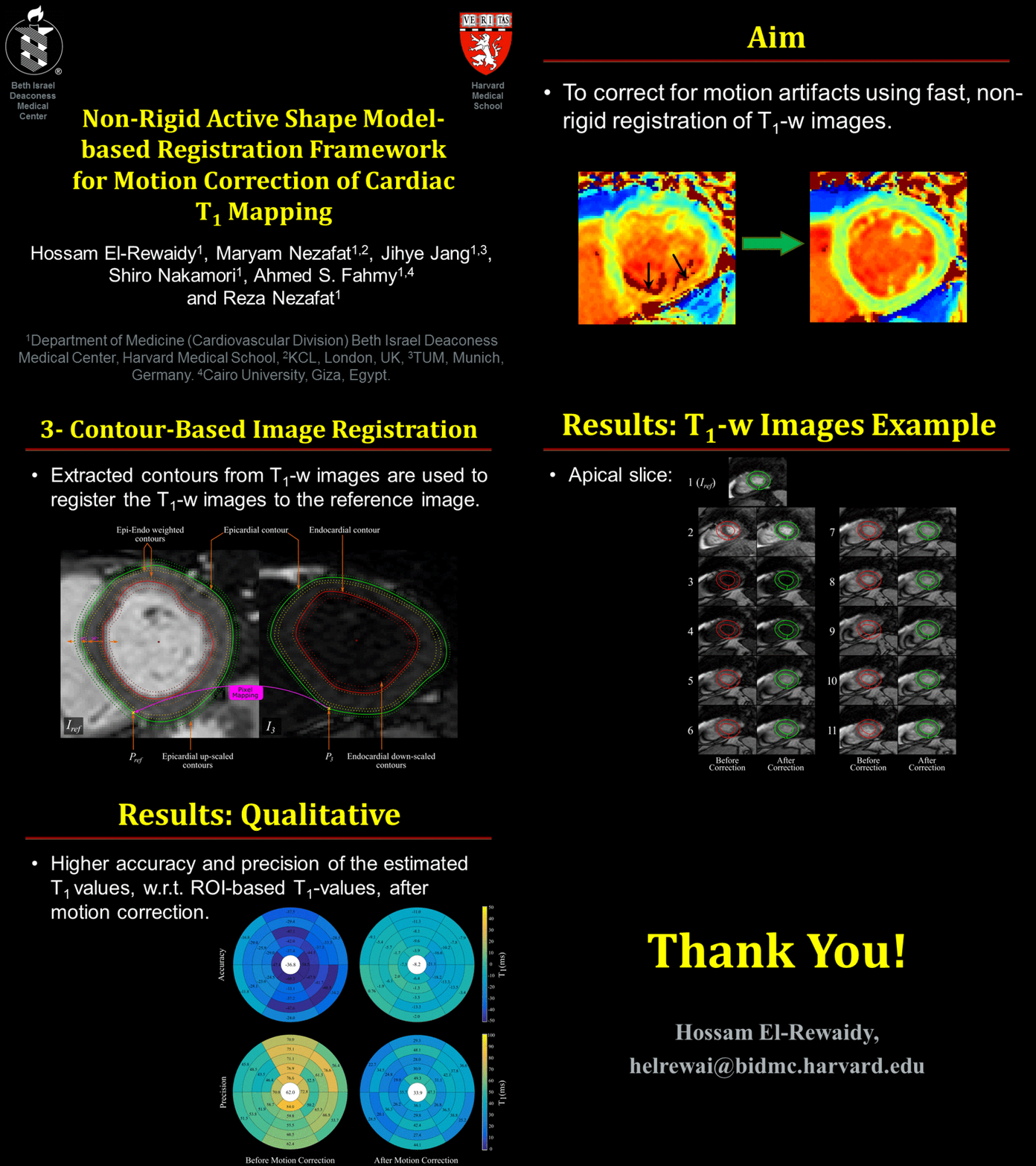
El-Rewaidy H, Nezafat M, Jang J, Nakamori S, Fahmy A, Nezafat R. Nonrigid Active Shape Model-Based Registration Framework for Motion Correction of Cardiac T1 Mapping. Magn Reson Med. 2018;

ASM Reg T1

PURPOSE: Accurate reconstruction of myocardial T1 maps from a series of T1-weighted images consists of cardiac motions induced from breathing and diaphragmatic drifts. We propose and evaluate a new framework based on active shape models to correct for motion in myocardial T1 maps.
METHODS: Multiple appearance models were built at different inversion time intervals to model the blood-myocardium contrast and brightness changes during the longitudinal relaxation. Myocardial inner and outer borders were automatically segmented using the built models, and the extracted contours were used to register the T1-weighted images. Data acquired from 210 patients using a free-breathing acquisition protocol were used to train and evaluate the proposed framework. Two independent readers evaluated the quality of the T1 maps before and after correction using a four-point score. The mean absolute distance and Dice index were used to validate the registration process.
RESULTS: The testing data set from 180 patients at 5 short axial slices showed a significant decrease of mean absolute distance (from 3.3 ± 1.6 to 2.3 ± 0.8 mm, P  0.001) and increase of Dice (from 0.89 ± 0.08 to 0.94 ± 0.4%, P  0.001) before and after correction, respectively. The T1 map quality improved in 70 ± 0.3% of the motion-affected maps after correction. Motion-corrupted segments of the myocardium reduced from 21.8 to 8.5% (P  0.001) after correction.
CONCLUSION: The proposed method for nonrigid registration of T1-weighted images allows T1 measurements in more myocardial segments by reducing motion-induced T1 estimation errors in myocardial segments. Magn Reson Med, 2018. © 2018 International Society for Magnetic Resonance in Medicine.

2017

Leshem E, Tschabrunn C, Jang J, Whitaker J, Israel Zilberman, Beeckler C, Govari A, Kautzner J, Peichl P, Nezafat R. High-Resolution Mapping of Ventricular Scar: Evaluation of a Novel Integrated Multielectrode Mapping and Ablation Catheter. JACC: Clinical Electrophysiology. 2017;3(3).

OBJECTIVES
This study sought to evaluate an investigational catheter that incorporates 3 microelectrodes embedded along the circumference of a standard 3.5-mm open-irrigated catheter.

BACKGROUND
Mapping resolution is influenced by both electrode size and interelectrode spacing. Multielectrode 
mapping catheters enhance mapping resolution within scar compared with standard ablation catheters; however, this requires the use of 2 separate catheters for mapping and ablation.
METHODS
Six swine with healed infarction and 2 healthy controls underwent mapping of the left ventricle using a THERMOCOOL SMARTTOUCH SF catheter with 3 additional microelectrodes (0.167 mm2) along its circumference (Qdot,Biosense Webster, Diamond Bar, California). Mapping resolution in healthy and scarred tissue was compared between the standard electrodes and microelectrodes using electrogram characteristics, cardiac magnetic resonance, and histology.

RESULTS
In healthy myocardium, bipolar voltage amplitude was similar between the standard electrodes and microelectrodes, with a fifth percentile of 1.19 and 1.30 mV, respectively. In healed infarction, the area of low bipolar voltage (defined as <1.5 mV) was smaller with microelectrodes (16.8 cm2 vs. 25.3 cm2; p ¼ 0.033). Specifically, the microelectrodes detected zones of increased bipolar voltage amplitude, with normal electrogram characteristics occurring at the end of or after the QRS, consistent with channels of preserved subendocardium. Identification of surviving subendocardium 
by the microelectrodes was consistent with cardiac magnetic resonance and histology. The microelectrodes also improved distinction between near-field and far-field electrograms, with more precise identification of scar border zones.
CONCLUSIONS
This novel catheter combines high-resolution mapping and radiofrequency ablation with an 
open-irrigated, tissue contact–sensing technology. It improves scar mapping resolution while limiting the need for and cost associated with the use of a separate mapping catheter. (J Am Coll Cardiol EP 2017;3:220–31)