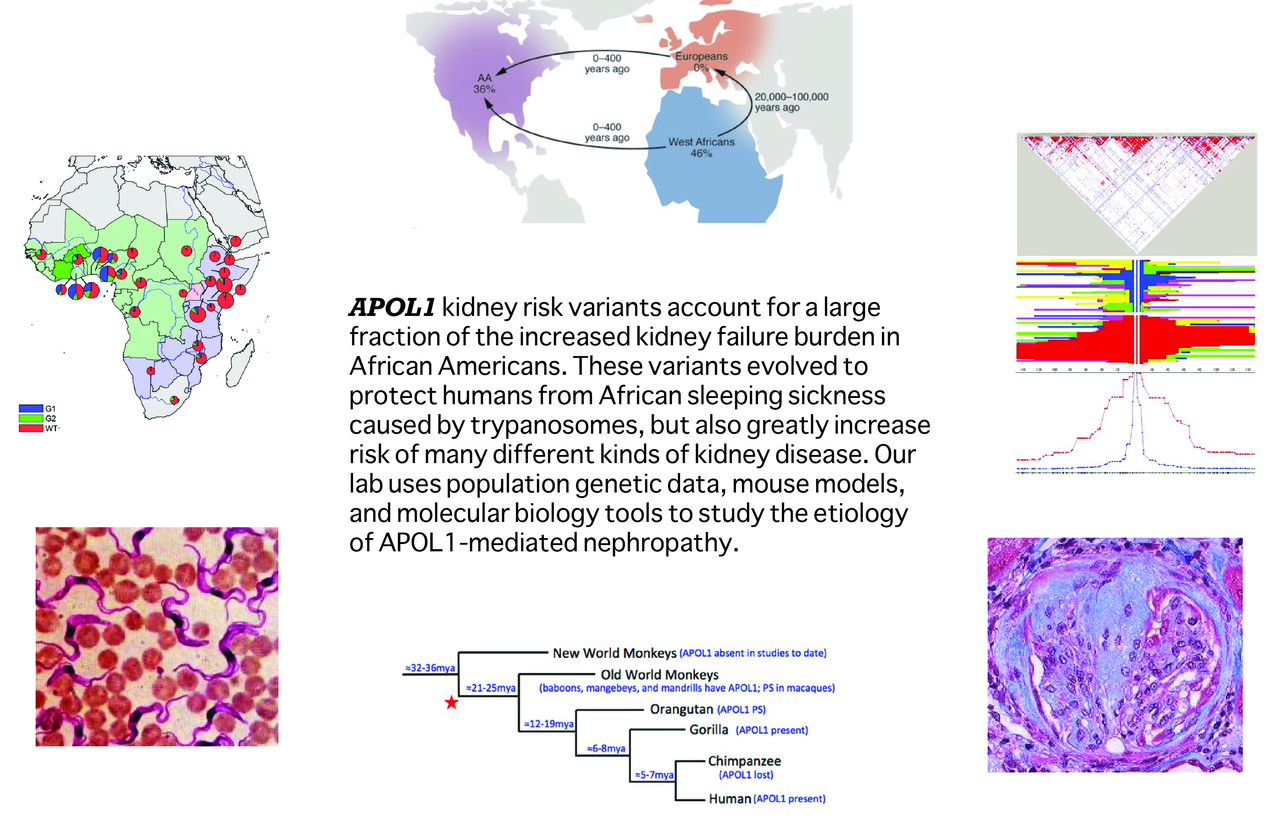
Rates of kidney disease in Black individuals are much higher than in other ethnic groups. Using genome-wide association studies, the Friedman Lab and others identified risk alleles in the APOL1 gene in Black patients of West African descent that increase the risk of developing focal segmental glomerulosclerosis (FSGS). The risk alleles are unusual in that they are both common and have a large effect size. However, not all individuals harboring risk alleles go on to develop disease.
Our lab studies two basic questions: 1) How does the behavior of the risk variants differ from the non-risk forms of APOL1, and 2) why do some people with the high-risk APOL1 genotype develop kidney disease, whereas others do not?
We developed cellular and animal models to study mechanisms of disease development and progression, and to evaluate treatment strategies. We are currently interested in studying genetic modifiers, gene x environment interactions, and the biological behavior of APOL1 risk variants in these model systems.