
Research

Research interests

I am interested in defining population characteristics amenable to new therapies with use of natural history, clinical phenotyping, and biomarkers relevant to essential tremor (ET), Parkinson's disease (PD) and related disorders.

  • Clinical epidemiology of motor aging disorders: essential tremor (ET), Parkinson's disease (PD), and parkinsonism in longitudinal cohorts
  • Long-term motor and cognitive trajectories of with ET, PD, and Dementia with Lewy Bodies (DLB)
  • Developing outcomes measures for tremor and parkinsonism
  • Digital technologies to aid clinical outcome assessment and real-world clinical management of Parkinson's disease (PD) and related disorders
  • Novel therapeutic interventions and clinical trials for Parkinson's disease and essential tremor
  • Clinical research innovation in academic-industry and public-private partnerships
Digital technologies to assess and improve outcomes in aging and Parkinson's disease

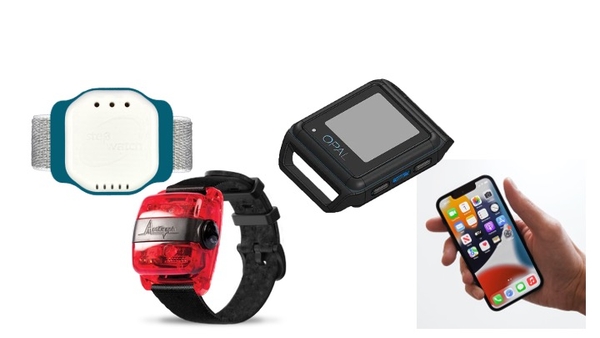
wearable sensors opal stepwatch actigraph smartphone

Digital technologies can measure many meaningful aspects of health in Parkinson's disease and in aging. Digital outcome assessments have been validated in multiple settings, but different patient populations and health concepts of interest provide multiple opportunities to explore their use in improving clinical care and self-management of chronic conditions. My research is focused on the following:

  • What meaningful health concepts should be captured for a given patient population
  • How they can best be implemented in cost-efficient and scalable ways
  • Understanding barriers to use of technology to improve self-management of chronic conditions like Parkinson's disease

Clinical epidemiology of tremor

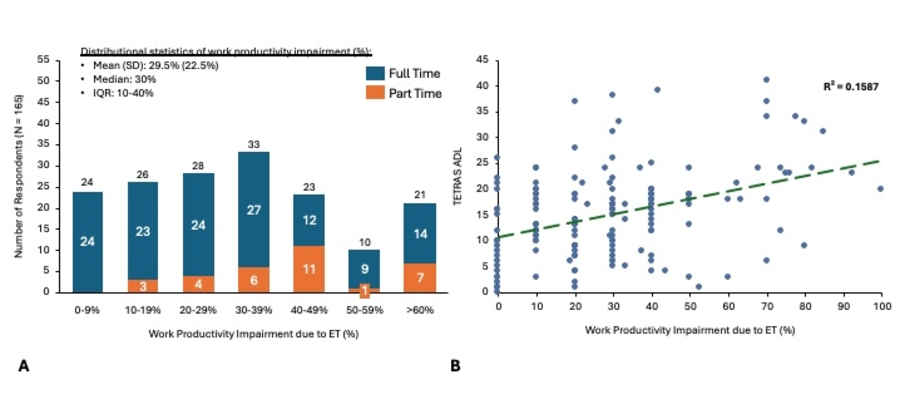
graph showing relationship between tremor and work productivity

One of my research interests is understanding the long-term outcomes of individuals living with essential tremor (ET) and how this is differentiated from parkinsonism with and without tremor. We leverage existing patient cohorts, randomized controlled clinical trials, and clinic- and community-based samples of people with tremor and parkinsonism in order to: 

  • Assess associations between tremor and behavioral symptoms and cognitive impairment
  • Explore mechanisms of tremor severity and disease progression over time
  • Develop clinical tools (standardized assessments, biomarkers) to improve diagnostic accuracy in clinic

Novel drug and device therapies for ET


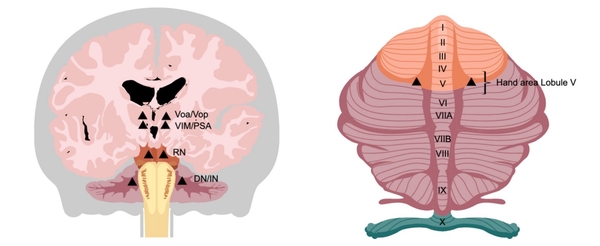
Image of brain with stimulation sites for tremor

Essential tremor (ET) is the most common movement disorder globally and has been shown to be associated with significant disability and negative impact on quality of life. No new drug therapies have been approved by the FDA since 1997. Biochemical and electrophysiological studies have promise in generating new therapy targets for ET. Our work also focuses on studying novel therapeutic device and drug interventions in clinical trials for ET.