
About
Lung Injury Research Center
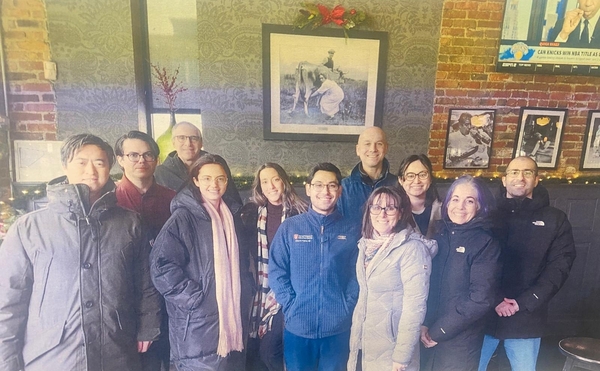
The Lung Injury Research Center is a multidisciplinary collaborative based research team at Beth Israel Deaconess Medical Center and Harvard Medical School, led by Dr. Elias Baedorf‑Kassis and Dr. Daniel Talmor. The Center is committed to advancing the care of critically ill patients through a physiology‑driven, translational research program that spans across respiratory failure, shock, sedation, and organ support.
With emphasis on innovation and integration of advanced physiologic monitoring, rigorous mechanistic clinical trials, and data-driven modeling, the team seeks to improve clinical decision-making, optimize supportive therapies, and drive meaningful improvements in outcomes across critically ill patients.
Research Area
- PREVENT VILI: Precision Ventilation to Attenuate Ventilator-Induced Lung Injury is an NIH funded multicenter clinical trial designed to test whether individualized ventilatory strategies guided by respiratory mechanics can reduce lung injury in mechanically ventilated patients. The study focuses on using Transpulmonary pressure measured during end-expiratory to guide PEEP titration. PREVENT-VILI aims to determine whether this type of personalized ventilation can improve outcomes and prevent ventilator-induced lung injury in critically ill patients rather than just using standard of care (NCT6066502).
- Pragmatic Clinical Trials: We conduct pragmatic trials embedded within routine ICU care to evaluate interventions in real-world settings. This approach allows us to generate scalable, practice-changing evidence while maintaining strong physiologic and clinical relevance, bridging the gap between research and bedside implementation.
- Advanced Respiratory Physiology: A core strength of our program is the study of respiratory mechanics and patient–ventilator interaction. Our research includes airway opening pressure, expiratory flow limitation, and driving pressure, as well as the use of esophageal balloon monitoring to estimate pleural and transpulmonary pressures. These efforts aim to refine individualized respiratory support and improve understanding of the heterogeneity of respiratory failure.
- ARDS Research: We conduct comprehensive research in acute respiratory distress syndrome (ARDS), focusing on mechanisms of lung injury, physiologic variability, and precision approaches to ventilation. Our work spans observational studies, mechanistic investigations, and clinical trials designed to improve outcomes in this high-risk population.
- Diaphragmatic Stimulation (STIMIT Trial): Our group is actively involved in innovative therapeutic strategies, including the STIMIT trial, which investigates diaphragmatic stimulation to preserve respiratory muscle function in mechanically ventilated patients. This work reflects our broader commitment to advancing supportive care beyond traditional ventilation strategies (NCT05883163).
