Words by our 2024-2025 Hinohara Fellow, Dr. Masumi Ogushi:
It has been about six months since I returned to Japan in March after having the opportunity to learn at Harvard Medical School and Beth Israel Deaconess Medical Center as a Hinohara Fellow.
Now that some of the work I began after returning to Japan is starting to take shape, I wanted to share an update with you and, more importantly, express again how grateful I am for the opportunity you gave me through the Hinohara Fellowship.
When I applied for the fellowship, I hoped that what I learned abroad would not remain simply part of my own career development. I wanted to bring those experiences back to Japan by creating a place where family medicine could be practiced and learned in the community, and by developing opportunities for young physicians to learn about education and leadership.
Over the past six months, some of what I envisioned at that time has gradually begun to become a reality.
The first major step has been building a home for family medicine in Nagasaki.
On September 14, we opened Nagasaki Family Clinic.
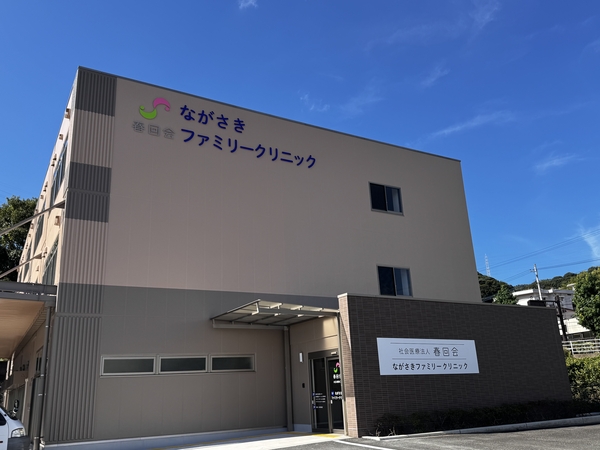
Our goal is to provide comprehensive and continuous care across the lifespan, from children to older adults, regardless of disease or organ system, connecting patients with specialty care when needed and supporting them across both outpatient and home-based care.
At the same time, I hope the clinic can become more than a place where we provide clinical care. I would like it to grow into an educational home where medical students, residents, and young physicians can learn primary care in the community.
One of the things I came to appreciate strongly during my time in the United States was the importance of providing medical education in primary care settings, as well as giving medical students meaningful clinical exposure from an early stage of their training.
Primary care offers opportunities to understand aspects of patients' lives that can be difficult to see within the hospital alone: their families, work, communities, social circumstances, and the continuum of their lives before, during, and after illness. I believe that exposure to this perspective early in medical training can profoundly shape how future physicians understand both patients and medicine.
In Japan as well, I believe we need more opportunities for medical students to encounter patients and communities in primary care settings from an early stage and to learn how health and illness are connected to people's everyday lives.
My hope is therefore to develop Nagasaki Family Clinic into a place where students and young physicians can gain early clinical exposure and learn patient-centered care, community-based medicine, and family medicine through real relationships with patients and the community.
Our clinic opening was recently featured in the Nagasaki Shimbun newspaper in an article discussing how comprehensive primary care can contribute to the future of the region. I had the opportunity to speak about the kind of family medicine we hope to build in Nagasaki: caring not only for diseases but also for patients' lives and families, supporting people across generations, and connecting hospitals, specialty care, primary care, and home-based care.
Rather than simply importing systems I observed overseas, one of my main goals now is to use the perspectives I gained abroad to ask what kind of model will work best in Nagasaki and to build it locally.
A second area of focus has been medical education and faculty development.
I am currently participating in the HANDs Faculty Development Course to further develop my skills in medical education, while continuing to teach in several settings. I also serve as a visiting assistant professor at a university and as a member of the Internationalization Committee of the Japan Society for Medical Education.
Another continuing interest of mine is how the approaches to education I observed at Harvard and BIDMC might be adapted to primary care education in Japan.
Through the International Committee of the Japan Primary Care Association, I continue to organize the Morning Lecture Series in collaboration with BIDMC and Harvard Medical School. I recently had the opportunity to give one of the Morning Lectures myself, comparing primary care systems and educational approaches in different countries and discussing what we might learn from them in Japan.
It has been particularly meaningful to create a continuing pathway through which some of what I received as a fellow can be shared with primary care physicians in Japan.
A third major focus has been leadership development for young physicians.
I currently serve as the leader of JACRA, the Chief Resident Leadership Academy, where we provide a program for chief residents and other young physicians in similar leadership roles to learn about education, leadership, team building, and organizational improvement.
Seeing young physicians in the United States receive structured opportunities to develop not only their clinical skills but also their abilities in education, leadership, and team management—and then take on meaningful roles within their organizations—had a significant impact on me.
It strengthened my belief that young physicians in Japan also need opportunities to develop these skills so that they can educate others, improve teams and organizations, and take leadership roles earlier in their careers. JACRA is one way I am now trying to put that idea into practice.
I am also a core member of WeLEAD JAPAN, where I am involved in interdisciplinary leadership education and building networks that extend beyond medicine.
My international work has continued as well. I am currently organizing an international panel for the Asia Pacific Medical Education Conference (APMEC), which will be held in Kyoto in January 2027. The panel will bring together young physicians from Australia, Malaysia, Taiwan, and Japan to discuss roles similar to the Chief Resident across different healthcare and postgraduate training systems.
Although the titles and structures differ from country to country, young physicians often play important roles in teaching, coordinating teams, and serving as a bridge between trainees and faculty. Through this panel, we hope to compare these roles across the Asia-Pacific region and explore how leadership development for young physicians can be better supported. This project, too, has been strongly influenced by my exposure in the United States to the Chief Resident system and to structured leadership development for young physicians.
Looking back over these first six months since returning to Japan, I realize again that what I gained from the fellowship was much more than specific knowledge or skills.
I had the opportunity to experience a different healthcare system, see different approaches to medical education, meet leaders from diverse backgrounds, and, perhaps most importantly, have the time and space to think seriously about what kind of place and community I wanted to build in the future.
All of these experiences are connected to the work I am doing now.
Above all, being selected as a Hinohara Fellow and having all of you encourage me to go abroad, learn, and explore gave me confidence and support that have continued to influence the choices I have made since then.
I am very happy to be able to report that some of the ideas I spoke about when I first applied for the fellowship are now beginning to take shape through community-based family medicine, medical education, and leadership development for the next generation of physicians.
Thank you again, sincerely, for giving me this opportunity and for all the support you have provided along the way.
These projects are all still at an early stage, but I hope to continue ensuring that what I gained through the Hinohara Fellowship does not remain with me alone, but is passed on to my community and to the next generation.
