
About
About
Wilson C. “Toby” Hayes, PhD
Wilson C. “Toby” Hayes, PhD, is a pioneering figure in modern biomechanics whose scholarship, teaching, and mentorship have helped shape the field of orthopaedic and musculoskeletal research for more than six decades. Trained as a mechanical engineer and applied mechanician, Dr. Hayes built an academic career spanning Stanford University, the University of Pennsylvania, Harvard Medical School, the Harvard-MIT Division of Health Sciences and Technology, Oregon Health & Science University, and Oregon State University. At Harvard, he served as the Maurice Edmond Mueller Professor of Biomechanics and directed a highly influential research program that helped establish fundamental principles governing skeletal mechanics, bone strength, fracture risk, injury biomechanics, and fall mechanics. His laboratories received sustained support from the NIH, CDC, NSF, and other agencies, and his work helped connect engineering principles with some of the most important clinical questions in orthopaedics and musculoskeletal medicine.
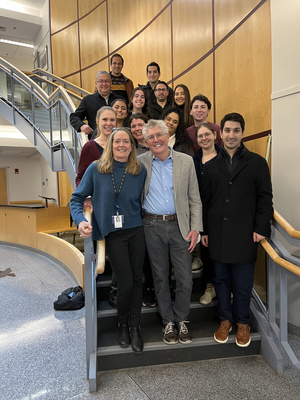
Equally important to Dr. Hayes’s scientific accomplishments has been his commitment to developing the generations that followed him. He directly mentored 29 doctoral and postdoctoral trainees, many of whom went on to become internationally recognized investigators, department and laboratory leaders, and presidents of major scientific societies. Among them are individuals who themselves became influential figures in orthopaedic research and biomechanics, multiplying his impact across institutions and generations. His academic stewardship extended to serving as Founding Co-Editor-in-Chief of the Journal of Orthopaedic Research, helping establish an enduring forum for rigorous musculoskeletal science, and co-editing the landmark textbook Basic Orthopaedic Biomechanics, which educated generations of students, engineers, scientists, and clinicians.
Dr. Hayes’s contributions have been recognized with many of the field’s highest honors, including the Kappa Delta Award of the American Academy of Orthopaedic Surgeons and the Giovanni Borelli Award of the American Society of Biomechanics. His enduring legacy, however, extends beyond discoveries, publications, and awards. It resides in the scientific discipline he helped advance, the institutions and programs he strengthened, and, most importantly, the investigators he inspired and mentored to carry the field forward.
Carl J. Shapiro Department of Orthopaedic Surgery at Beth Israel Deaconess Medical Center
The Carl J. Shapiro Department of Orthopaedic Surgery at Beth Israel Deaconess Medical Center has a long tradition of advancing musculoskeletal medicine by integrating clinical excellence, engineering, basic science, and translational research. Its modern research enterprise traces its roots to the Orthopaedic Biomechanics Laboratory established in 1978, an academic lineage that included the pioneering work of Wilson C. “Toby” Hayes and helped establish BIDMC as an important center for orthopaedic biomechanics. Today, that legacy continues through the Center for Advanced Orthopaedic Studies (CAOS) and the Musculoskeletal Translational Innovation Initiative (MTII), which together occupy approximately 7,600 square feet of dedicated research space and support investigations ranging from skeletal biology and biomechanics to imaging, therapeutics, medical devices, artificial intelligence, clinical outcomes, and global orthopaedic health.
The scale of the Department’s research enterprise is reflected in its output. Its faculty produced 567 peer-reviewed publications between 2020 and 2025, including work appearing in Nature Materials, Nature Communications, Science Translational Medicine, Proceedings of the National Academy of Sciences, and multiple Lancet journals, as well as the leading journals in orthopaedic surgery and musculoskeletal research. During FY2020–2024, investigators secured more than $17 million in external research funding, while the Department supported 122 active IRB-approved clinical research protocols. Innovation arising from the program has generated 13 new patents and 3 startup companies, demonstrating a deliberate commitment to translating discovery into technologies that improve patient care.
At the core of the enterprise are seven principal investigators, complemented by a large community of postdoctoral fellows, graduate and medical students, residents, and undergraduate investigators. More than 50 laboratory and clinical research trainees participate in Department programs at any given time, while its highly competitive Orthopaedic Research Summer Internship recently attracted 388 applicants for 19 positions. This combination of scientific productivity, innovation, and intensive mentorship reflects a philosophy deeply connected to the legacy celebrated by the Hayes Symposium: that the enduring impact of an academic department is measured not only by the discoveries it makes, but also by the investigators it develops and the future of the field it helps create.
