
The Luckett Lab
Ipelege, Iponagatse is a Setswana phrase meaning stand up for yourself, show up! It is a message of hope and empowerment. Women themselves can prevent cervical cancer by embracing screening and vaccination. Health care providers can amplify this effect by empowering, encouraging, and supporting women. Together we make a difference.

The Global Elimination Strategy
The World Health Organization aims to reduce cervical cancer to fewer than 4 new cases per 100,000 women by 2030; however, many parts of the United States and most other countries are still far from achieving this goal. Current incidence in the US and Botswana is 6.3 and 39.1 cases per 100,000 women, respectively, and these cancers occur at a median age of 50 years, having broad impacts on families, communities, and health systems.
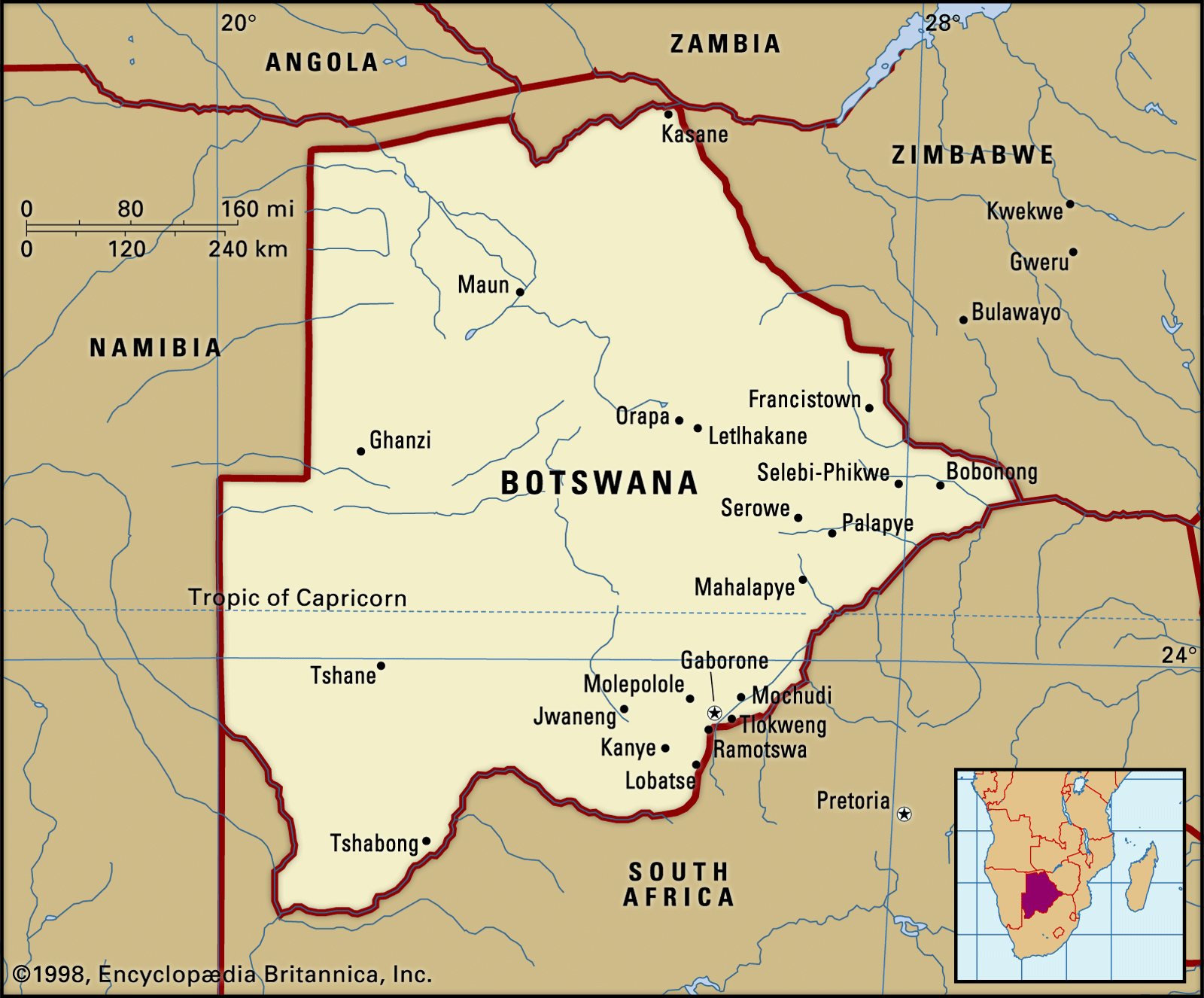
Botswana has become a global leader in HIV management by providing universal antiretroviral therapy, eliminating mother-to-child HIV transmission, and exceeding UNAIDS 95-98-98 targets. With an estimated HIV prevalence (ages 15-49) of 16.6%, Botswana's population is at high-risk for cervical cancer development.
Women living with HIV are 6 times more likely to develop cervical cancer compared to women without HIV.
World Health Organization
Highly effective cervical screening will have the most immediate impact in averting cancer diagnoses in the next 3-4 decades. Long-standing, effective cervical screening has reduced cervical cancer incidence across settings. Following significant declines in cervical cancer incidence and mortality in the US with the introduction of screening in the 1970s, cervical cancer mortality has stagnated since 2015.
HPV has become the global standard for effective cervical screening because it is objective, reproducible, and has high sensitivity for detection of cervical dysplasia and cancer. HPV self-collection is a patient-empowered approach that has been shown to be accurate, acceptable, and feasible across contexts, including Botswana. HPV self-collection improves screening efficiency by eliminating the pelvic examination as the first screen, thus averting issues related to insufficient time, staffing, space, and equipment, allowing providers to focus on diagnosis and treatment of HPV-positive women.
Team Fun & Presentations