

Anastasia Katsiampoura, MD, PhD
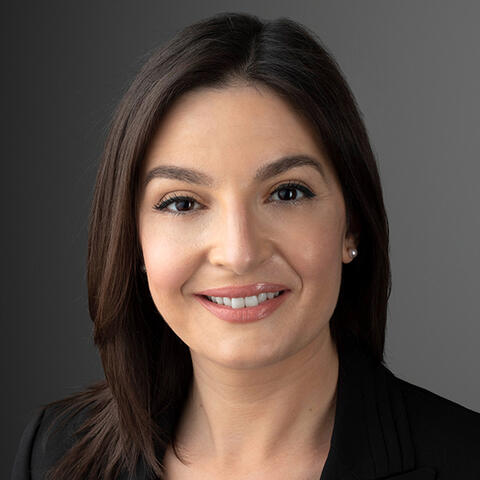
Anastasia Katsiampoura, MD, PhD
Dr. Anastasia Katsiampoura is an Assistant Professor of Anaesthesia at Harvard Medical School and a cardiac anesthesiologist at Beth Israel Deaconess Medical Center, where she specializes in the perioperative care of adults undergoing structural heart and complex cardiac procedures. She earned her MD and PhD from the National and Kapodistrian University of Athens. Her doctoral research focused on sodium disturbances in critically ill patients, during which she developed a predictive formula based on the law of conservation of mass to estimate sodium and fluid deficits—an innovation with direct application in intensive care medicine.
Dr. Katsiampoura completed postdoctoral training in gastrointestinal oncology at MD Anderson Cancer Center, where she contributed to foundational advances in personalized cancer treatment. She helped develop one of the largest colorectal cancer patient-derived xenograft (PDX) platforms. She established a novel method for detecting KRAS mutations in circulating tumor DNA, which has since become the clinical gold standard for non-invasive tumor profiling and therapeutic monitoring.
She completed residency and fellowship training in anesthesiology and adult cardiothoracic anesthesia at St. Elizabeth’s Medical Center/Tufts Medical School, followed by a specialized fellowship in adult structural heart anesthesia at Beth Israel Deaconess Medical Center. Her current research at BIDMC focuses on the immunologic and inflammatory mechanisms underlying complications in cardiac surgery, with a particular emphasis on regulatory T cells (Tregs) and CD39-mediated purinergic signaling. Supported by the John Hedley-Whyte Award and the Society of Cardiovascular Anesthesiologists Starter Grant, she leads translational efforts to identify biomarkers of inflammation, develop predictive models, and propose targeted therapies to improve perioperative outcomes in high-risk surgical populations.
Dr. Katsiampoura has authored numerous peer-reviewed publications in anesthesiology, immunology, and cancer biology, and contributed to textbook chapters on interventional echocardiography and perioperative management in structurally complex cases. She has also led the development of clinical protocols and educational tools—such as fluoroscopic and echocardiographic training models for transseptal puncture and mitral valve assessment—used in both research and advanced clinical education.
As an educator, she is deeply involved in teaching and mentoring trainees in cardiac anesthesia, transesophageal echocardiography, and structural heart interventions. She serves as a core faculty member of the Society of Cardiovascular Anesthesiologists Echo Board Review Course. She is a frequently invited lecturer at national CME programs, including Harvard Anesthesia Update.
Her academic mission is to advance mechanistic understanding and personalized care in cardiothoracic anesthesia through translational research and data-driven improvement of perioperative outcomes.

