

Satya Krishna Ramachandran, MD, MPH
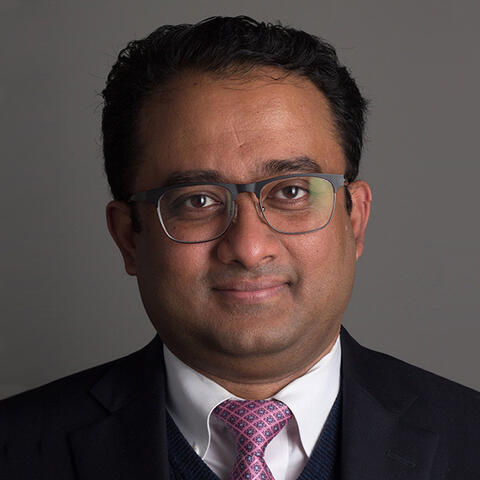
Satya Krishna Ramachandran, MD, MPH
Dr. Satya Krishna “Krish” Ramachandran is an internationally recognized leader in healthcare quality and patient safety. After his early training years in India at JIPMER, Pondicherry, he specialized his medical and leadership career at the Oxford Radcliffe hospitals, the University of Michigan Health System, and Brandeis University. Krish is an Associate Professor at Harvard Medical School, practices anesthesiology, runs a highly successful quality and safety fellowship program, and drives healthcare change through his leadership roles in Boston.
His expertise falls in three main areas:
Sleep Apnea and Perioperative Outcomes:
Patients with sleep apnea, most of whom remain undiagnosed or untreated, have a higher risk of developing cardiac and respiratory complications after surgery. He led the development, evaluation, and implementation of several pathway components to modify perioperative outcomes in sleep apnea patients. These include universal sleep apnea screening, fast-track preoperative sleep monitoring, formal post-anesthesia respiratory care protocols for early postoperative non-invasive ventilation, and smart order sets to integrate sleep apnea status with opioid orders. He has led the work for the literature synthesis and recommendations for preoperative screening of patients with sleep apnea in major international consensus projects and is currently the senior lead of a three-society international consensus guideline effort for postoperative management of sleep apnea patients.
Perioperative Quality and Safety
The major focus of his perioperative role in the past 20 years of his career has been the advancement of patient safety and the quality of care. Through his leadership positions at Michigan Medicine and at BIDMC, he has led team-based training of hundreds of anesthesia, surgery, and nursing staff. He has received grant funding for this work, specifically, to develop and lead the expansion of in-situ simulation programs across both BILH and MGB. These activities help staff identify and respond to hidden hazards in their work environments that endanger patients. Preceding the first pandemic surge, he led the development of workflows for perioperative management of patients with suspected or confirmed COVID-19, which the Anesthesia Patient Safety Foundation recognized as one the most downloaded articles internationally in 2020. To enhance team knowledge of clinical care and outcomes, he leveraged collaborations with researchers and perioperative leaders to create Learning Health Systems. These data solutions help individual clinicians and teams learn about priority areas in need of improvement and assess the impact of their management on desired patient outcomes. Through this experience, and other studies of team-based or individual clinician treatment behaviors, he has developed an expertise in care transformation of complex surgical patients. In addition, he continues to publish ongoing work on perioperative outcomes that evaluate the impact of safety interventions in real-world analyses.
Moving beyond the confines of Anesthesia, he led the implementation of a Perioperative Quality and Safety program. As a result of this work, his program reduced the time to complete high-quality investigations of adverse events, improved the effectiveness of proposed interventions, and engaged frontline staff in early post-event debriefs. He pioneered the use of mass drills for perioperative staff at BIDMC to engage in problem solving using a compressed root cause analysis. In-situ simulation drills co-developed and disseminated by him and his mentees have provided direct impacts through improved crisis management preparedness and perceptions of safety culture. He has led the creation of clinical data dashboards that span organizational-level to individual-level visualizations, identify areas in need of improvement and assess the impact of interdisciplinary interventions. This expertise in Quality and Safety has led him to be appointed as an Associate Medical Director at CRICO, where he leads the engagement of anesthesia and surgical leaders in Harvard-affiliated hospitals, a powerful coalition with an agenda for research and improvement in patient safety across the greater Boston area.
International Executive Scholars program in Perioperative Quality and Safety:
Dr. Ramanchandran led the development of a collaborative 2-year fellowship that incorporates formal didactic education through the MHQS program at HMS into a clinical-operational program at BIDMC. This program has a formal collaboration with the Royal College of Anaesthetists, UK. The program has provided exceptional growth opportunities for participants and significant academic success through educational, operational and research activities.
After 5 years of inception, the program’s impact is set to expand with the incorporation of the fellows in the Safe Anesthesia Liaison Group, UK, and the launch of an annual international Quality and Safety conference in Oxford. As one of three international advisors for C20 India, he was directly involved in articulating the considerations for the G20 health priorities, a major undertaking that engaged over 1000 non-governmental organizations and 250,000 inputs.

