
Research
Basic and Translational Research

In our laboratory, we study mechanisms of innate immune activation in liver diseases and its role on modulation of liver parenchymal cells including hepatocytes and stellate cells. We employ a broad range of preclinical murine liver injury models of alcoholic hepatitis, non-alcoholic steatohepatitis, liver fibrosis and drug-induced-liver injury and study their relevance to human disease based on patient samples. Our recent focus is on the role of microRNAs and extracellular vesicles in immunoregulation in the pathogenesis of liver diseases. Check out the project overviews below or click on the project link at left for a more detailed description!
Alcohol and Monocyte Signaling

Macrophages (MØ), Kupffer cells (KC) and neutrophils mediate inflammation and play an important role in the pathogenesis of alcoholic liver disease (ALD). Previous studies have demonstrated damaging effects of pro-inflammatory macrophages on alcoholic liver inflammation and high neutrophil infiltration in the liver predicted poor outcome in human alcoholic hepatitis. Prior reports in humans and our preliminary data in mice show that both classically activated inflammatory, M1, and alternatively activated, M2, macrophages are present in the liver after chronic alcohol intake. However, the significance of M1 and M2 type macrophage (MØ) polarization or therapeutic targeting of MØ polarization is yet to be explored in ALD. M2 “alternatively activated” macrophages have anti-inflammatory function and contribute to tissue repair. M2 MØ phenotype is induced and modulated (regulated) by various factors including cytokines, microRNAs, transcription factors or phagocytosis of apoptotic neutrophils. We found decreased phagocytic activity in alcohol exposed MØ and observed decreased apoptosis in neutrophils isolated from livers of chronic alcohol-fed mice. Thus, we hypothesize that insufficient M2 polarization permits chronic inflammation and preferential M1 macrophage phenotype in the liver.
microRNAs in Alcoholic Liver Disease
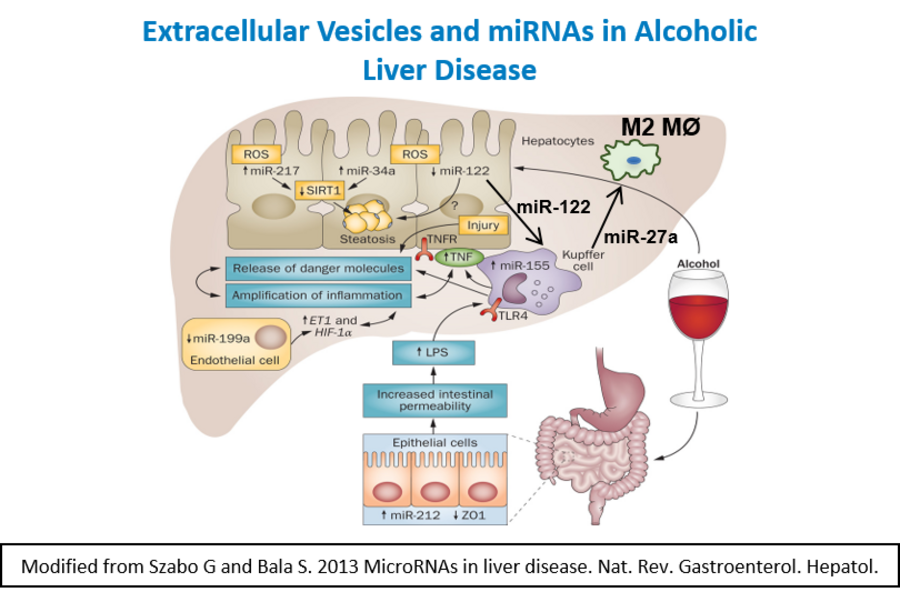
Alcoholic liver disease affects millions of people worldwide and it remains to be a therapeutic challenge for clinicians. Activation of the inflammatory cascade via gut-derived lipopolysaccharide (LPS) contributes to alcoholic liver disease via induction of pro-inflammatory cytokines induction in Kupffer cells. Micro-RNA-155 (miR-155), small non-coding RNA molecule, is important in regulation of inflammation. Our studies demonstrated that chronic alcohol up-regulates miR155 in macrophages in vitro as as as in vivo in the liver and in isolated Kupffer cells and this miR155 increase contributes to inflammation in alcoholic liver disease. We recently reported that miR-155 deficient mice are partially provoked with alcohol induced liver damage and fibrosis. Our studies on miR-155 revealed a critical role for reducing miR-155 in hepatocytes in the progression of alcoholic liver disease.
Biomarkers in Liver Disease
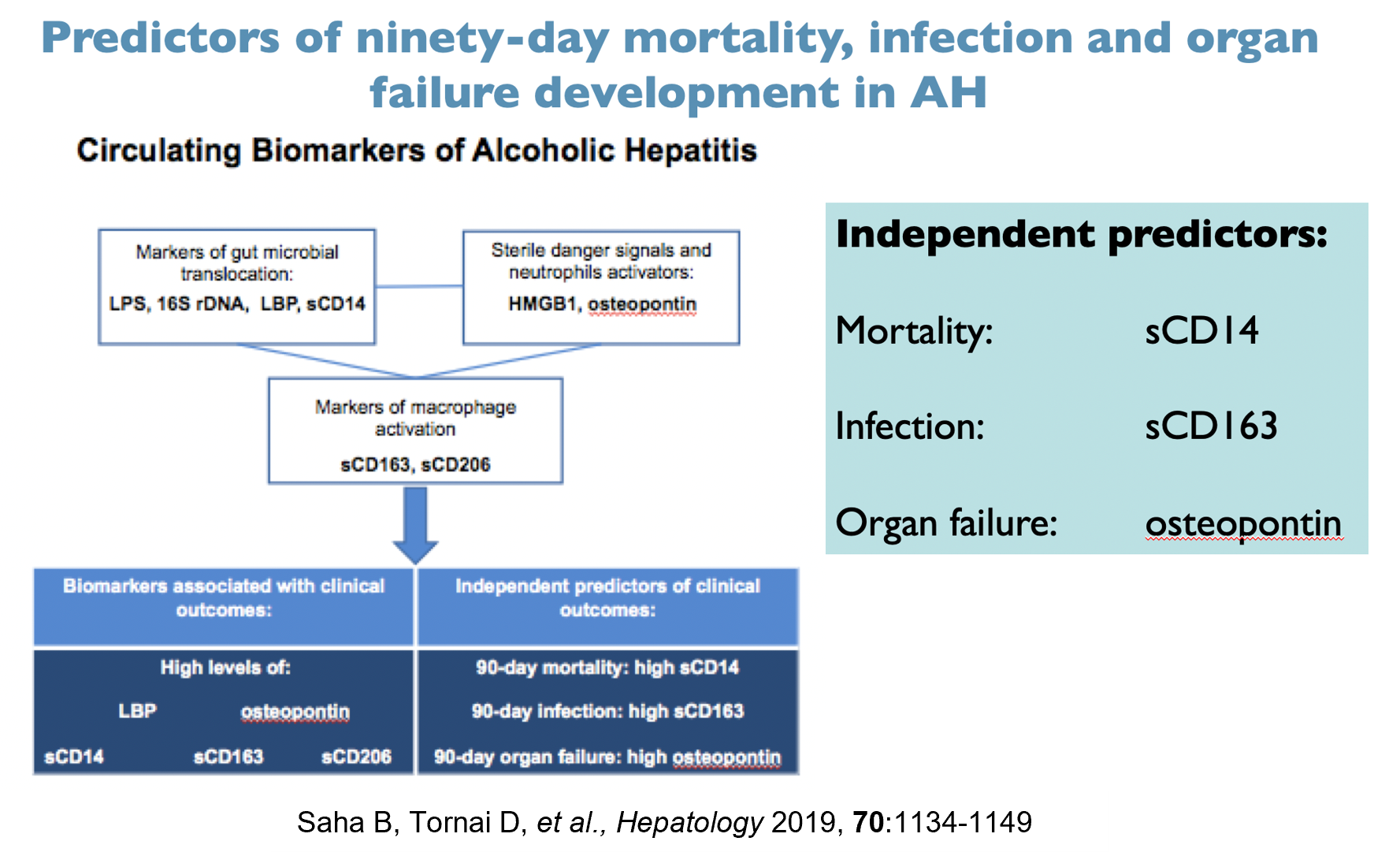 We are exploring novel therapies and biomarker discoveries in AH. Direct effects of alcohol on hepatocytes, increased intestinal permeability and activation of innate immune system (Kupffer cells) by gut-derived LPS are major factors in AH leading to over-activation of the pro-inflammatory cascade. Currently, there are no effective strategies in AH. Our data in a mouse model demonstrated that deficiency of IL-1R or inhibition of IL-1R signaling by administration of IL-receptor antagonist significantly attenuated steatosis and inflammatory cytokine induction in alcoholic liver disease. We also identified that microRNA-155 is an alcohol induced regulator of increased Kupffer cell activation TNF-alpha production in ALD. Furthermore, increased circulating levels of microRNAs correlated with liver injury and inflammation identifying them as potential biomarkers.
Clinical Alcoholic Hepatitis
Alcoholic Hepatitis Clinical and Translational Network Late Phase Clinical Trials and Observational Studies
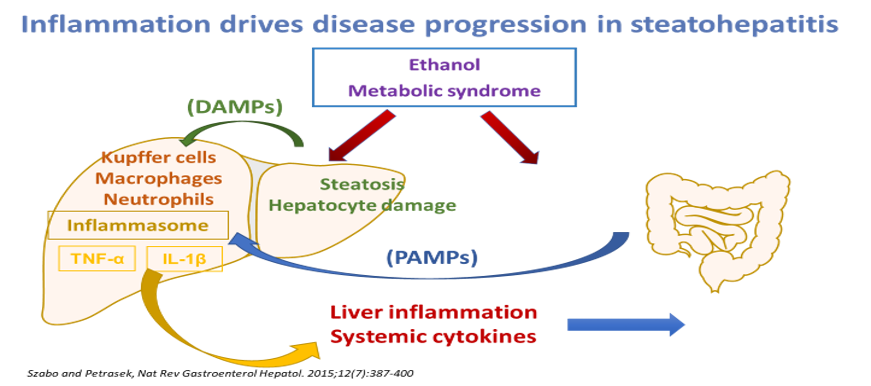
Alcoholic liver disease (ALD) is a major cause of liver-related morbidity and mortality in the US. Alcoholic hepatitis (AH) is a life-threatening form of ALD. Severe AH is associated with a mortality exceeding 30% at 3 months. Despite its obvious public health and economic burden, there is a remarkable paucity of effective therapeutics for severe AH. Corticosteroids have been the mainstay of therapy for AH, but are only modestly effective and increase the susceptibility to severe infections while pentoxifylline has recently been shown to be ineffective. There is an urgent need to develop safe and effective targeted therapies for severe AH. Anakinra, an IL1β receptor antagonist, zinc, and granulocyte colony stimulating factor (G-CSF) have been evaluated and have potential therapeutic benefit. Due to limitations in patient recruitment for clinical trials in general and AH in particular, there is a compelling need for an integrated national consortium for this deadly disease.
The use of the IL-1 receptor antagonist, anakinra, in this clinical trial is supported by preclinical studies in our group that demonstrated the role of NLRP3 inflammasome and the therapeutic benefit of anakinra in a mouse model of alcoholic liver disease.
Biomarkers in Liver Disease
We are exploring novel therapies and biomarker discoveries in AH. Direct effects of alcohol on hepatocytes, increased intestinal permeability and activation of innate immune system (Kupffer cells) by gut-derived LPS are major factors in AH leading to over-activation of the pro-inflammatory cascade. Currently, there are no effective strategies in AH. Our data in a mouse model demonstrated that deficiency of IL-1R or inhibition of IL-1R signaling by administration of IL-receptor antagonist significantly attenuated steatosis and inflammatory cytokine induction in alcoholic liver disease. We also identified that microRNA-155 is an alcohol induced regulator of increased Kupffer cell activation TNF-alpha production in ALD. Furthermore, increased circulating levels of microRNAs correlated with liver injury and inflammation identifying them as potential biomarkers.