

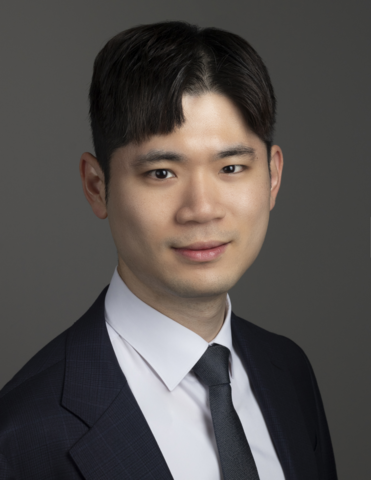
Hyeok-Hee Lee, MD, PhD is a post-doctoral research fellow hailing from Seoul, Korea. Hyeok-Hee completed both his medical and doctoral degrees at Seoul's Yonsei University College of Medicine, one of Korea's best private universities. He went on to residency at the Yonsei University-affiliated Severance Hospital, followed by a four-year physician-scientist fellowship at Yonsei. Hyeok-Hee is now a Translational Research Assistant Professor at his alma mater.
In recognition of his exceptional scholarship, Hyeok-Hee received the award for Highest Academic Achievement and the Young Medical Scientist Academic Award from Yonsei University in 2024. Currently, his research areas include primary and secondary prevention of cardiovascular disease as well as the study of cardiovascular disease in high-risk populations. Hyeok-Hee also has significant expertise in the area of hypertension -- he has been an author on every annual Korea Hypertension Fact Sheet published by the Korean Society of Hypertension since 2020.
Since his arrival at the Smith Center in January 2025, Hyeok-Hee has taken on several research projects, including one looking at hypertension in the NHANES dataset and another assessing outcomes of IVL vs. atherectomy in PAD.
We asked him to reflect on his journey to medicine and his ongoing work at the Smith Center
What sparked your interest in medicine? Why cardiology?
To be honest, I wasn’t initially drawn to medicine. I went to med school mainly because it was the most popular and competitive major in Korea. However, I was instantly hooked on cardiology during my second year, as soon as I first took a cardiology class. It was incredibly engaging—I had to really “think” to understand the physiology, which made it so fun. And most of all, I was fascinated by the very concept of “heart” itself.
Why did you choose to come work with Eric? Is there a particular aspect of his research that drew you to him?
During my time in Korea, I led a number of observational studies, mostly focused on cardiovascular disease prevention. I had always been interested in interventional cardiology as well, but I couldn’t quench my thirst at the time as I wasn’t able to find a mentor with expertise in observational studies within the field. Then I came across Eric (and the Smith Center) and instantly knew he was exactly the mentor I had been looking for—I was drawn to his work leveraging various observational data and methods to address important research questions in interventional cardiology, particularly those related to causal inferencing.
What are a few ongoing or completed projects that you would like to highlight? What do you hope the impact of these projects will be?
I’d definitely like to highlight our ongoing renal denervation registry. Although it’s just getting underway, this nationwide registry dedicated to renal denervation would provide valuable insights into the utilization patterns and associated benefits and risks of this new, groundbreaking technology.
Reflecting on the time you’ve spent so far at the Smith Center, what have been one or two of your biggest takeaways from conducting work with this team?
I’ve been truly fascinated by how openly people share their raw ideas, develop them into concrete research projects, and collaborate to produce the best possible outcomes. My time here so far has taught me the true power of communication and collaboration.
What do you hope to accomplish before you leave the Smith Center? What skills do you hope to bring back to your home institution?
Before leaving the center, I wish to further build my expertise in making causal inferences from observational data. I also hope that the work I do here leaves a lasting impact in the field of cardiology and ultimately benefits patients with heart diseases.
Bonus: Favorite piece of cardiology vocabulary?
Pacemaker!

