

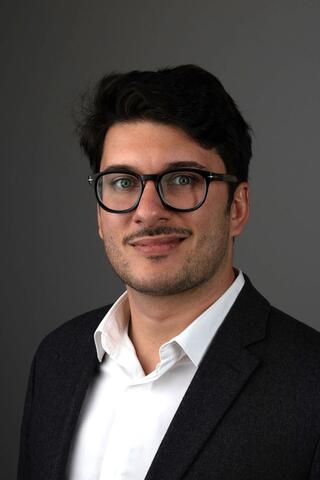
Dr. Maxime Lebaz, a native of Paris, France, joined the Smith Center in the fall of 2024 as a Postdoctoral Research Fellow. A practicing vascular surgeon, Dr. Lebaz recently accepted a Vascular Surgery Fellowship at the European Hospital: Georges Pompidou in Paris. Previously, he served as a Resident of Vascular Surgery at the University of Lille in Lille, France. Dr. Lebaz is an accomplished proceduralist, having performed over one hundred procedures including open and endovascular lower limb revascularizations as well as internal carotid revascularizations. At the Smith Center, Dr. Lebaz is conducting research on the prevalence and management of vascular disorders under the mentorship of Dr. Secemsky.
As he approaches one year at the Smith Center, we asked him to reflect on his experience so far.
1. What sparked your interest in medicine? Why vascular surgery?
I grew up in a medical environment through my family, which naturally sparked my interest in pursuing a career in healthcare. While I am not a cardiologist, I am a vascular surgeon. My passion for surgery comes from the desire to have an immediate and significant impact on patients, combined with the appeal of precision, technical skill, and meticulous work. Vascular surgery lies at the intersection of multiple specialties—including cardiology, cardiac surgery, neurology, nephrology, and urology—which makes it particularly exciting. Arteries connect all organs, and this unique position within the human body fascinated me. I was especially drawn to the versatility of the field, which allows for both open and endovascular procedures, often transitioning seamlessly from one approach to the other.
2. Why did you choose to come work with Eric? Is there a particular aspect of his research that drew you to him?
In the field of vascular medicine and surgery—and particularly in peripheral arterial disease—Eric has become a leading figure in our community through his prolific publications and his presence at major international conferences. Having worked myself for several years on peripheral arterial disease, I was introduced to Eric by my mentor in France, Professor Yann Gouëffic. This connection represented a unique opportunity that aligned perfectly with the direction I envisioned for my future career.
3. What are a few ongoing or completed projects that you would like to highlight? What do you hope the impact of these projects will be?
Currently, we have conducted substantial work on the impact of socioeconomic disparities among patients with critical limb-threatening ischemia. This particularly important project is part of a broader, future international effort. Looking ahead, our next projects will focus on refining existing algorithms for the endovascular management of femoropopliteal lesions. While numerous randomized controlled trials already guide us toward the best overall treatment strategies, the range of available devices at each procedural step—crossing, vessel preparation, lesion assessment, and treatment—continues to expand significantly. Our goal is to better define the role of each device and its impact on the patient’s final prognosis.
4. Reflecting on the time you’ve spent at the Smith Center so far, what have been one or two of your biggest takeaways from conducting work with this team?
After nearly a year at the Smith Center, the first thing I will remember is Eric’s leadership, energy, and mentorship. He gives great freedom in developing projects while maintaining enough oversight to make them even more impactful. Secondly, I would highlight the team spirit and the stimulating environment it creates. Everyone is deeply dedicated to their work and highly skilled, which makes for truly optimal working conditions.
5. What do you hope to accomplish before you leave the Smith Center? What skills do you hope to bring back to your home institution?
I still have many projects to develop before returning to France, including work on the long-term prognosis of abdominal aortic aneurysm management and comparisons of surgical treatments for aorto-iliac occlusive disease. Once back home, I hope to continue working with French public health databases, in a similar way to what we do here, with the goal of conducting comparative studies across countries. I would also like to bring back with me the tradition of our Monday morning staff meetings, where each team member takes a moment to share their weekend. I believe this strengthens human connections beyond the professional sphere.
6. Bonus: Best vascular medicine pun?
I always go with the flow… unless there’s a stenosis.

