
About
Meet Dr. Jennifer Ho

Professor of Medicine, Harvard Medical School
Harrison Family Endowed Chair in Cardiovascular Research, Director of Research, Division of Cardiovascular Medicine,
Advanced Heart Failure and Heart Transplantation, Beth Israel Deaconess Medical Center
Dr. Ho is Professor of Medicine at Harvard Medical School, Harrison Family Endowed Chair in Cardiovascular Research, Director of Research in the Division of Cardiovascular Medicine, faculty member of the advanced heart failure and heart transplantation section at Beth Israel Deaconess Medical Center, and Associate Member of the Broad Institute at Harvard and MIT. She completed her undergraduate studies at UC Berkeley, Harvard Medical School, followed by internal medicine residency at BWH, cardiology fellowship at UCSF, and heart failure/transplant fellowship at BWH.
Dr. Ho is an internationally recognized physician-scientist conducting clinical and patient-oriented translational research to understand mechanisms driving obesity-related cardiovascular disease with a focus on heart failure with preserved ejection fraction (HFpEF). Her work has advanced current understanding of HFpEF in the following areas: (1) delineating HFpEF risk and scope, including identification of adiposity and cardiometabolic dysfunction as central determinants of HFpEF, and the importance of sex differences in adiposity and female-specific risk enhancers; (2) identifying molecular mechanisms of HFpEF including the importance of systemic inflammation nd adiposity-related pathways; (3) highlighting the importance of inter-organ communication including vascular function as key factors in development of HFpEF.
Her lab has been continuously NIH funded, and she has published over 175 peer-reviewed original investigations. Dr. Ho directs the Cardiovascular T32 training grant at BIDMC, is the incoming Deputy Editor for Clinical Cardiology at Circulation, and serves on the Board of Directors of the Sarnoff Cardiovascular Research Foundation. She is the recipient of multiple teaching and mentoring awards including the 2023 A. Clifford Barger Excellence in Mentoring Award at Harvard Medical School, and was elected to the American Society of Clinical Investigation in 2024.
Research Areas
Delineating HFpEF risk and scope:
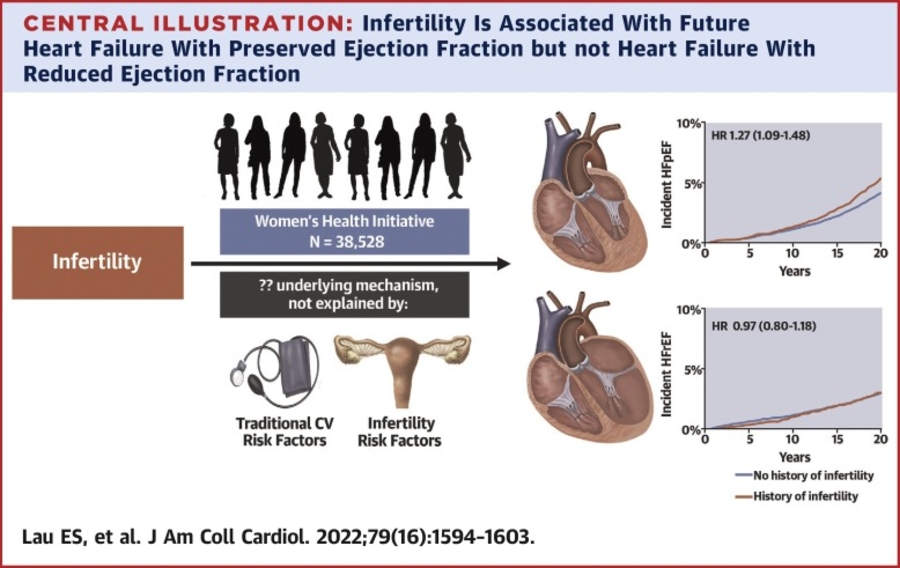
We have collaborated with multiple community-based epidemologic cohorts with >22,000 individuals followed prospectively for incident HF, which has enabled seminal insights stemming from this effort. For example, we demonstrated that clinical precursors of HFpEF vs HFrEF are distinct, and that traditional clinical risk models and cardiovascular biomarkers predict HFpEF less well than HFrEF, underscoring the need for better molecular phenotyping. Importantly, we showed that obesity and cardiometabolic factors including insulin resistance are central determinants of future HFpEF. We have highlighted important sex differences in HFpEF, including female-specific risk enhancers such as infertility. Recent work is focused on machine-learning approaches to refine our epidemiologic understanding of HFpEF, through the Broad Institute’s Machine Learning for Health initiative.
HFpEF molecular mechanisms of disease:
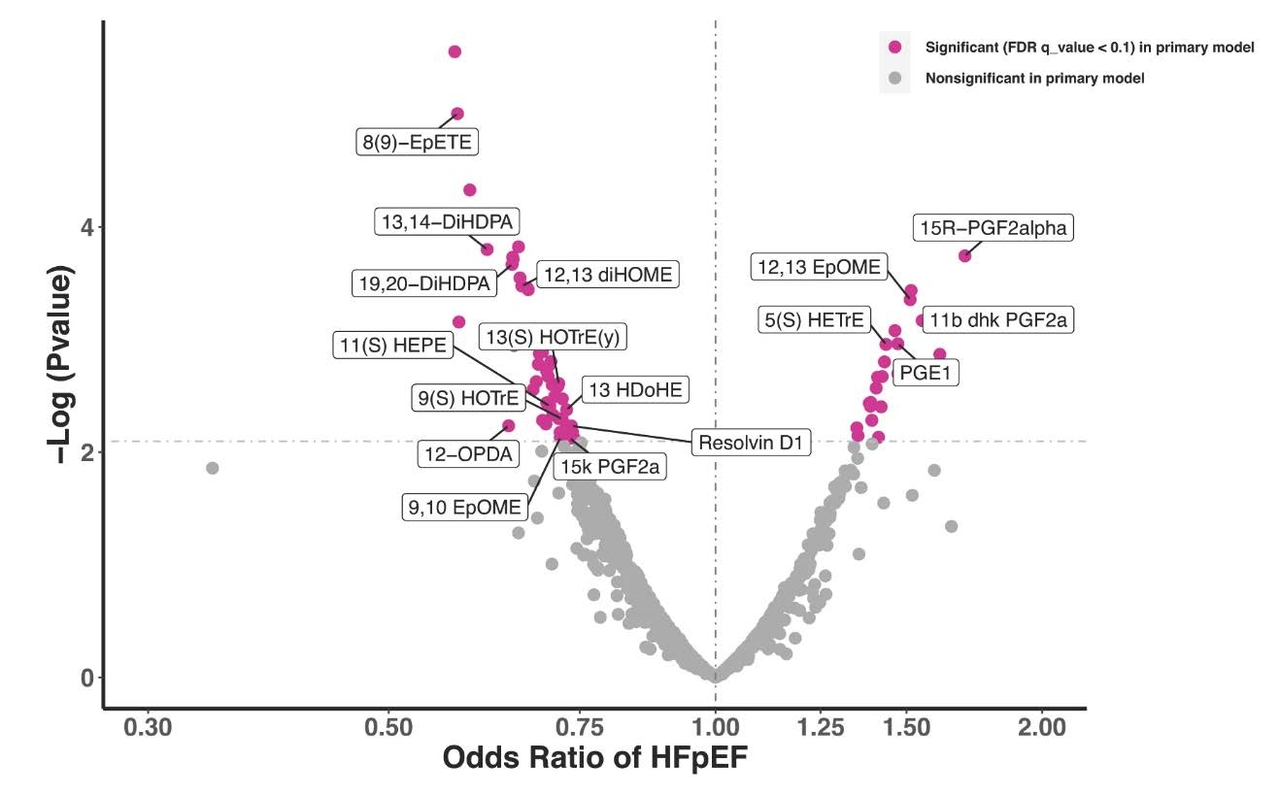
Our laboratory has leveraged molecular profiling to examine proteomic and metabolic signatures of HFpEF, work that established systemic inflammation and adiposity-related pathways as a central contributor to HFpEF development. Our group has demonstrated that eicosanoid and novel related bioactive lipids, known to govern upstream initiation of pro- and anti-inflammatory activity, are associated with HFpEF. Specifically, prostaglandin and linoleic acid derivatives are associated with greater odds, and epoxides and oxlipins with lower odds of HFpEF.
Inter-organ communication in HFpEF:
An important focus of the laboratory has been to understand cardiac-vascular and cardiac-pulmonary interactions as important contributors to HFpEF pathophysiology. We previously demonstrated enhanced large artery stiffness as an important determinant of diastolic reserve. We currently are using novel approaches to isolate human venous endothelial cells to better understand the interaction between endothelial health, cardiometabolic disease, and HFpEF.