


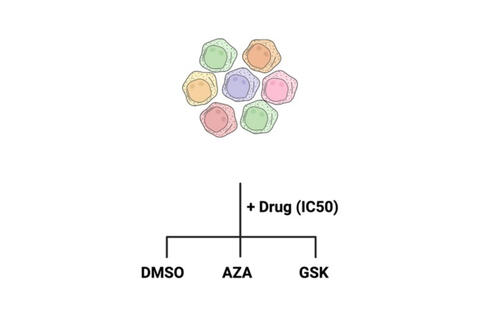
A new collaborative study led by scientists from the Broad Institute of MIT and Harvard, Dana-Farber Cancer Institute (DFCI), and Beth Israel Deaconess Medical Center (BIDMC) has uncovered how two widely used epigenetic drugs, azacytidine and decitabine, kill cancer cells through chromatin-based mechanisms rather than direct DNA damage. The work, available in bioRxiv (Puram et al., 2025), provides a long-sought explanation for how these agents exert their anti-tumor effects and opens new avenues for expanding their therapeutic use to solid tumors.
The study is a collaborative work with Dr. Todd Golub group at Broad Institute. It integrates large-scale genomic screening, proteomic profiling, and epigenomic mapping to reveal that the drugs’ killing effect arises primarily from DNA hypomethylation, the loss of DNA methyl groups, rather than from DNA damage, as previously assumed.
Using over 600 human cancer models, the team demonstrated that these demethylating agents trigger tumor cell death through depletion of DNMT1, the enzyme responsible for maintaining DNA methylation. The researchers further discovered that this hypomethylation creates a dependency on specific chromatin regulators, most notably the histone deubiquitinase USP48, which acts as a molecular “sensor” linking DNA methylation and histone modification.
Dr. Wu and her team at BIDMC played a central role in leading the epigenomic analyses, including ChIP-seq, ATAC-seq, and methylation profiling, which helped elucidate how USP48 is recruited to newly hypomethylated CpG islands to maintain chromatin homeostasis.
The study underscores the strength of collaborative research across the Broad Institute, Dana-Farber Cancer Institute, and BIDMC, combining expertise in functional genomics, proteomics, and epigenetics to tackle long-standing questions in cancer therapy.
These findings suggest that USP48 loss, an event in several tumor types, could serve as a biomarker to predict sensitivity to DNMT1 inhibitors, paving the way for precision epigenetic therapy in both blood and solid cancers.