

Research
Our Research
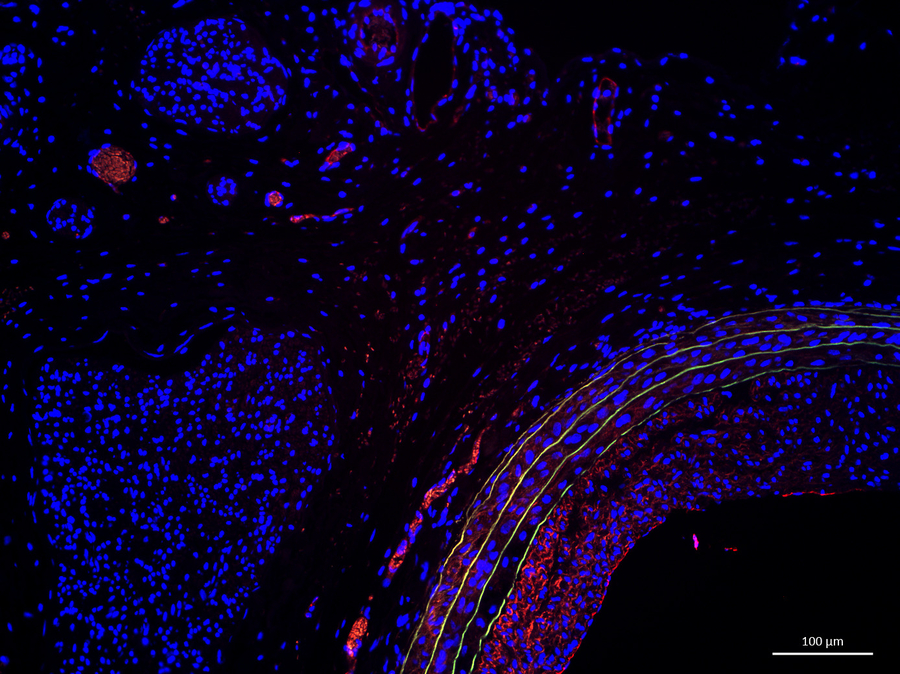
Peripheral arterial disease affects over 8.5 million adults in the United States alone, 230 million adults worldwide, and is the third leading cause of cardiovascular morbidity. Peripheral arterial disease can progress to lower extremity rest pain, nonhealing ulcers, tissue gangrene, and limb loss. Surgical lower extremity revascularization restores in-line arterial blood flow to the foot and the use of autogenous greater saphenous vein as a bypass conduit is the current gold-standard. However, a large proportion of patients do not have adequate vein and thus require the use of prosthetic grafts made of polyethylene terephthalate or expanded polytetrafluoroethylene. The patency of PG is dismal and the failure of long-term PG patency leads directly to an increased risk of acute limb loss, patient morbidity, and increased health care costs. The pathophysiology of delayed graft failure is attributable to a maladaptive disease process called intimal hyperplasia, predominating at the arterial-bypass interface.
Our lab focuses of using novel, state-of-the-art high-throughput single-nuclei RNA sequencing and spatial transcriptomic technologies to better understand the critical atherogenic and atheroprotective modulators intimal hyperplasia and harnesses the revolutionary advances in small interfering RNA gene therapy and customizable biodegradable materials to deliver targeted biologics directly to diminish intimal hyperplasia.
