Didactics
Our Comprehensive Didactic Schedule
Our didactic curriculum utilizes a multimodal approach to medical education based on adult learning theory. Sessions are led by faculty or guest speakers with expertise in the subject matter. Topics are selected based off the ABA Exam Blueprint but also include practical subject matter, including practice management, financial literary, ethics, and hands-on clinical skills. Our goal is to use evidence-based methods to train our residents to have a deeper understanding of the principles of our specialty.
Tuesday Education Day
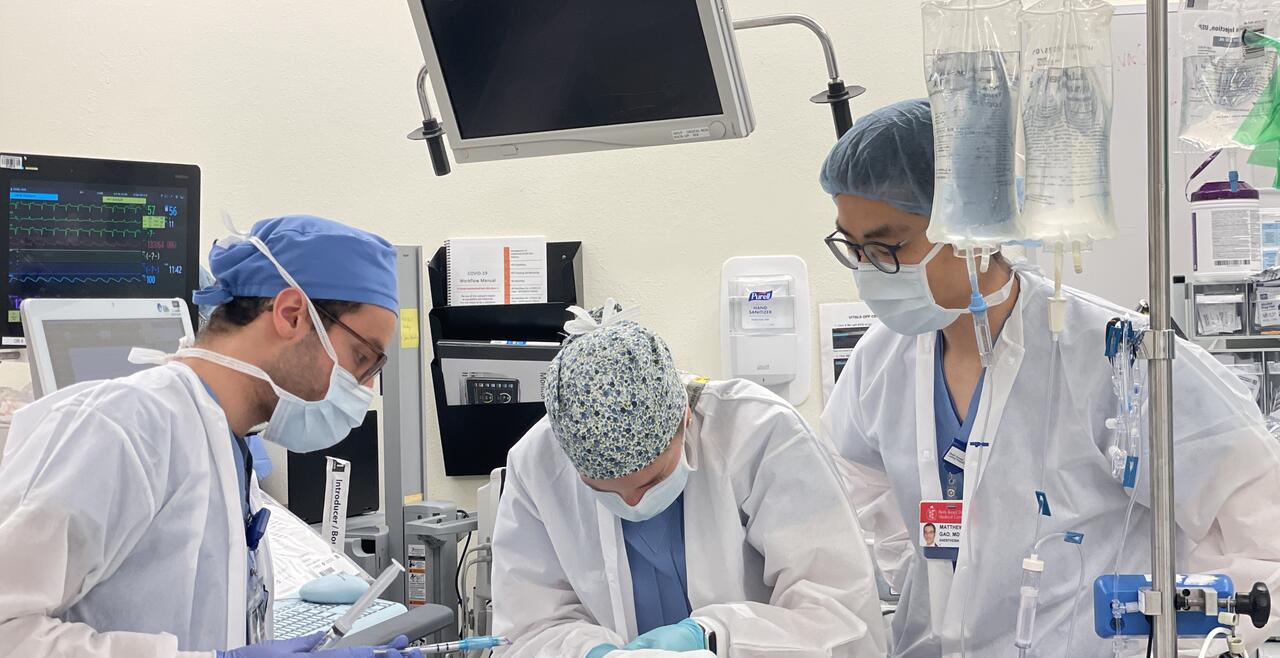
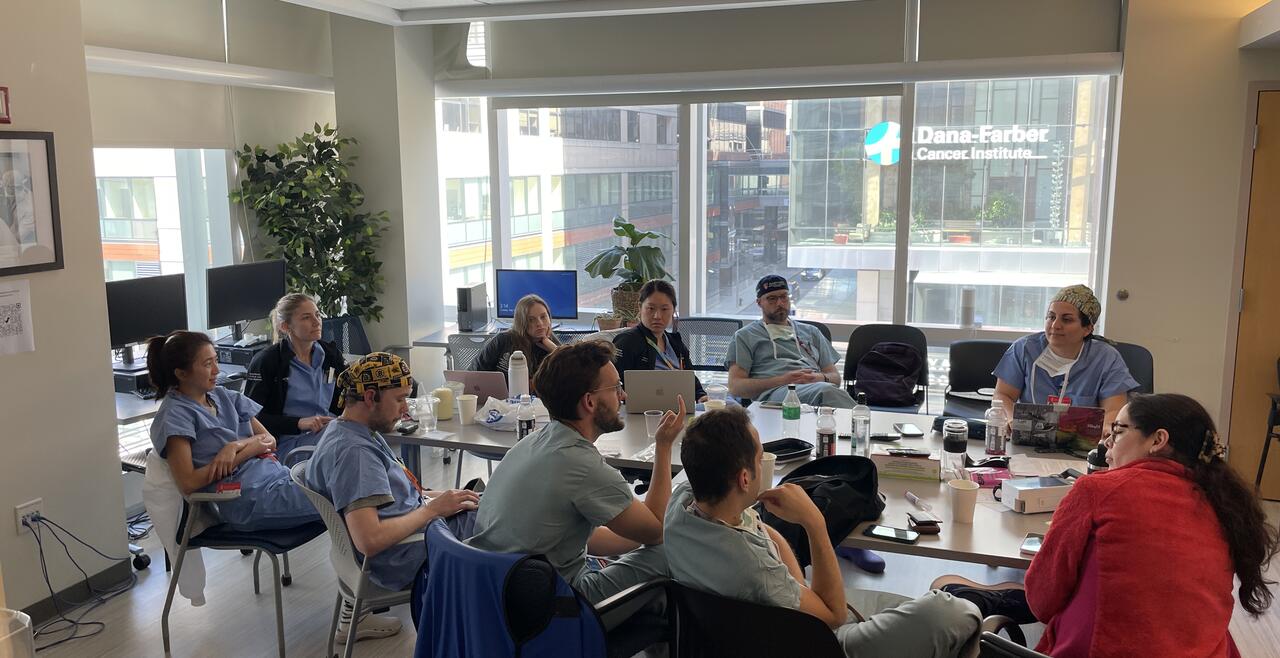
Residents participate in four hours of protected didactic time every Tuesday. Junior residents receive a combination of traditional lectures, problem-based learning discussions, BASIC exam review, and technical skills training in point-of-care ultrasound. In addition to traditional lectures based on the ADVANCED exam content outline, senior residents receive advanced training in point-of-care ultrasound, mock oral board exams, and subject matter in the anesthesia subspecialties. Workshops during TED for trainees of all levels include: awake intubation, awake craniotomy, regional nerve blocks, lumbar drain placement and management.
Simulation
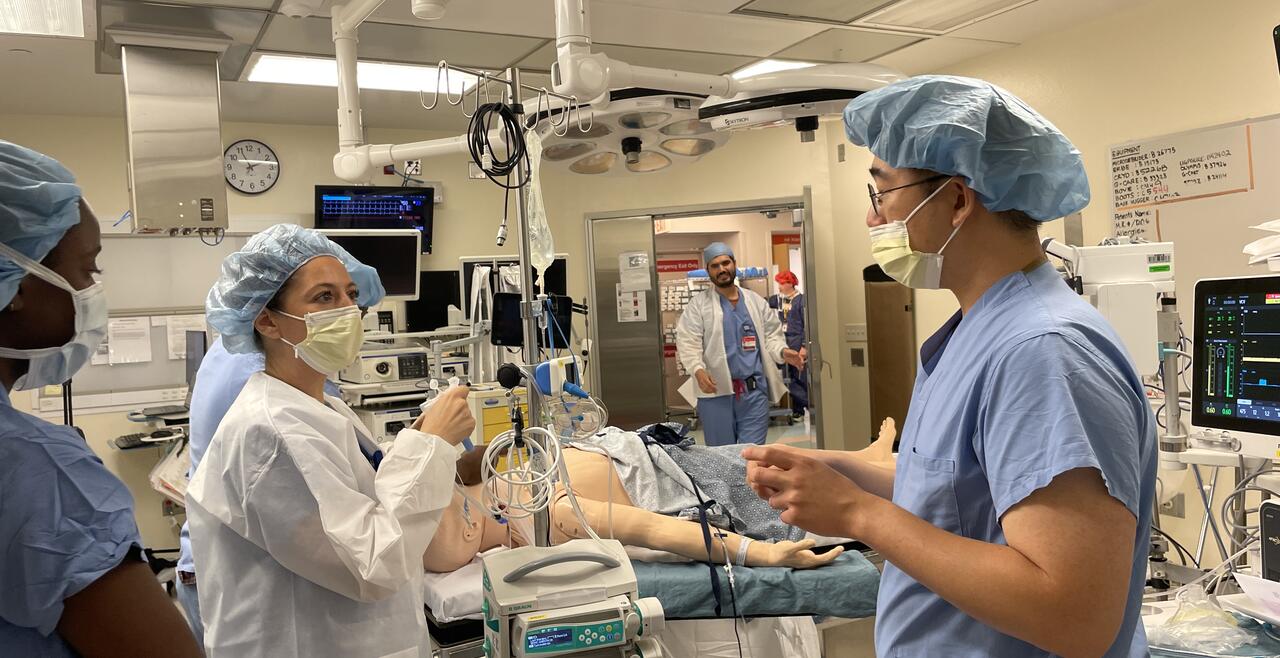
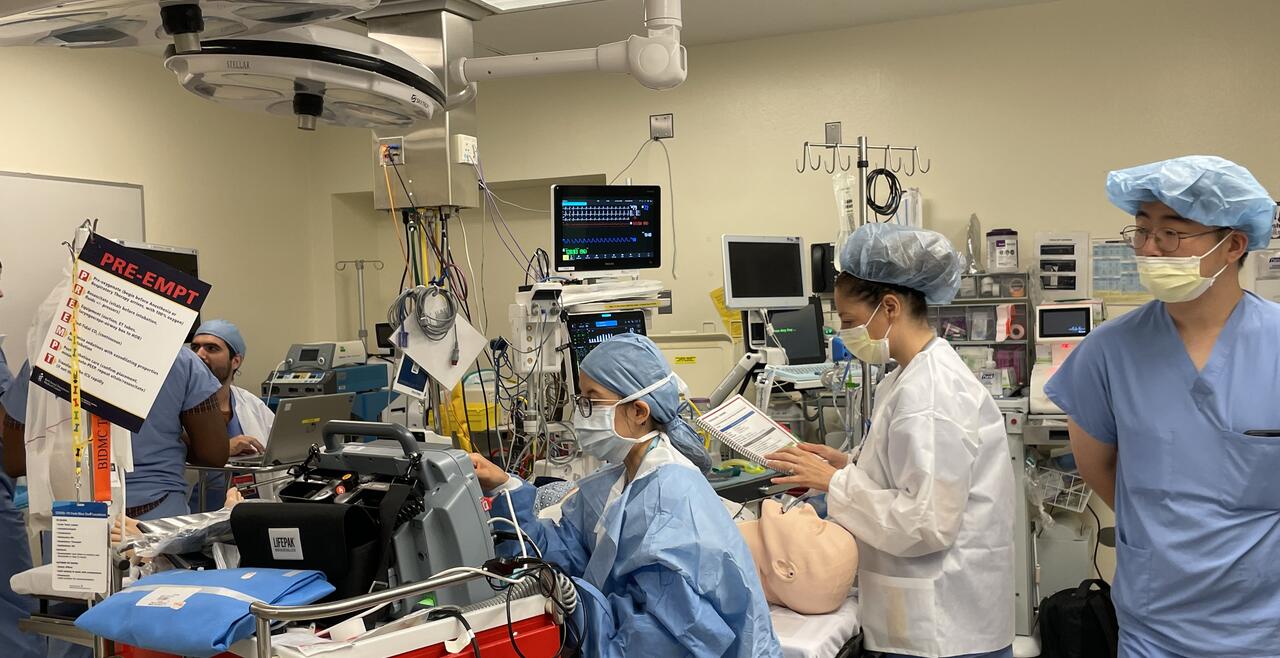
Weekly in-situ simulation sessions allow trainees to experience a perioperative crisis scenario in the safety of a simulated perioperative environment with the guidance of a faculty member. These 15-minute sessions take place during the working day, so trainees won’t miss an index case to participate. Sessions consist of one trainee and one faculty facilitator to guarantee personalized attention and debriefing points tailored to their training level and previous experience.
In addition to in-situ simulation, group simulation scenarios take place with a group of trainees during TED (see above) to focus on communication and teamwork during crisis management.
Senior residents interested in simulation education can take a month-long elective in simulation, working closely with the Center for Medical Simulation (CMS) to obtain clinical and instructor training in simulation theory. CMS is an endorsed center by the American Society of Anesthesiologists and part of their Simulation Education Network.
Perioperative Ultrasound Training
Point-of-care ultrasound (POCUS) training is incorporated into everyday cases as well as didactic sessions. Led by Dr. Michael Li, our Director of Resident Ultrasound Education, the ultrasound curriculum includes live lectures and interactive workshops with standardized patients. The curriculum also includes ultrasound anatomy and nerve blocks with the regional anesthesia faculty. Senior residents can take a POCUS elective, where they perform real-time bedside exams that influence anesthesia management.
Led by Drs. Feroze Mahmood and Robina Matyal, the echocardiography simulation lab provides various modalities for ultrasound training. Our lab is one of the most robust and prolific in the world. See the sample curriculum below:
Monthly Resident-Only Grand Rounds
Resident-only grand rounds take place monthly and cover topics that are pertinent to trainees of all levels. These sessions occur during faculty development grand rounds, so residents do not miss the regularly scheduled department grand rounds. Topics in the past have included: resident wellness, sleep deprivation, medicolegal issues for residents, contract review, substance abuse, and physician financial planning.
Patient Safety and Quality Improvement
Senior residents participate in a root cause analysis and action (RCAA) project around events with potential or actual patient harm. Alongside the Quality, Safety & Innovation faculty and fellows, residents identify systems issues and propose solutions using quality improvement methods to foster practice changes. Trainees put actionable items through an implementation plan, which helps them develop the tools needed to implement change in large complex systems. These findings are presented at department grand rounds, and their solutions are often adapted and implemented by the hospital.
Town Halls
Regularly scheduled resident town halls provide a venue to share updates regarding the program and bring up concerns with chief residents and program leadership, including the Program Director and Associate Program Directors.
Residents as Teachers
Senior residents participate in a Residents-as-Teachers program where they have the opportunity to engage in peer-to-peer teaching. This program allows senior residents to get a jumpstart on their career as leaders and educators, especially for those who are interested in academic medicine.
Anesthesia Skills Lab
The Anesthesia Skills Lab located on campus and offers a dedicated space for our residents to study, practice procedures, and use our task trainers and simulation equipment on their own time to develop their skills. We are also one of the select institutions piloting the Vantari Virtual Reality Simulator where residents can practice procedures or review anatomy in an immersive virtual environment.
Transition to CA-1 and July Orientation
July is an exciting time for new residents and faculty alike! Our July orientation program ensures a solid foundation to prepare residents for their career in anesthesiology. Afternoon classroom lectures on introductory concepts are supplemented with workshops and hands-on training in the ORs during the day. New residents are paired with the same faculty member for a week at a time for individualized feedback and teaching. Simulation is heavily incorporated into the orientation program as well, allowing trainees to enhance their communication and technical skills in the safety of a simulated OR.
ABA Board Preparation
Board preparation for the ABA BASIC, ADVANCED, and APPLIED exams are incorporated into various didactic sessions throughout the year. High-yield keywords and “Gaps in Knowledge” are thoroughly reviewed during TED sessions. Mock oral exams and OSCEs for senior residents are also incorporated into the TED schedule. The program also provides residents with complimentary TrueLearn question bank for the ITE, BASIC, and ADVANCED exams. Trainees also have access to Learning Management Systems (C8 and Docebo), as well as access to a multitude of online textbooks, journals, and review books through Harvard Medical School.
