

HuBMAP
Extramural Funding: 5U54HL165440-04
HuBMAP Consortium
The National Institutes of Health (NIH) has launched the Human BioMolecular Atlas Program (HuBMAP) to develop a framework for mapping the human body cell by cell. HuBMAP utilizes the latest molecular and cellular biology technologies to construct high resolution 3D spatial maps of human organs and tissues. Characterizing all healthy tissues at the cellular and molecular level will allow us to dramatically transform approaches in healthcare.

The Lymphatic TMC
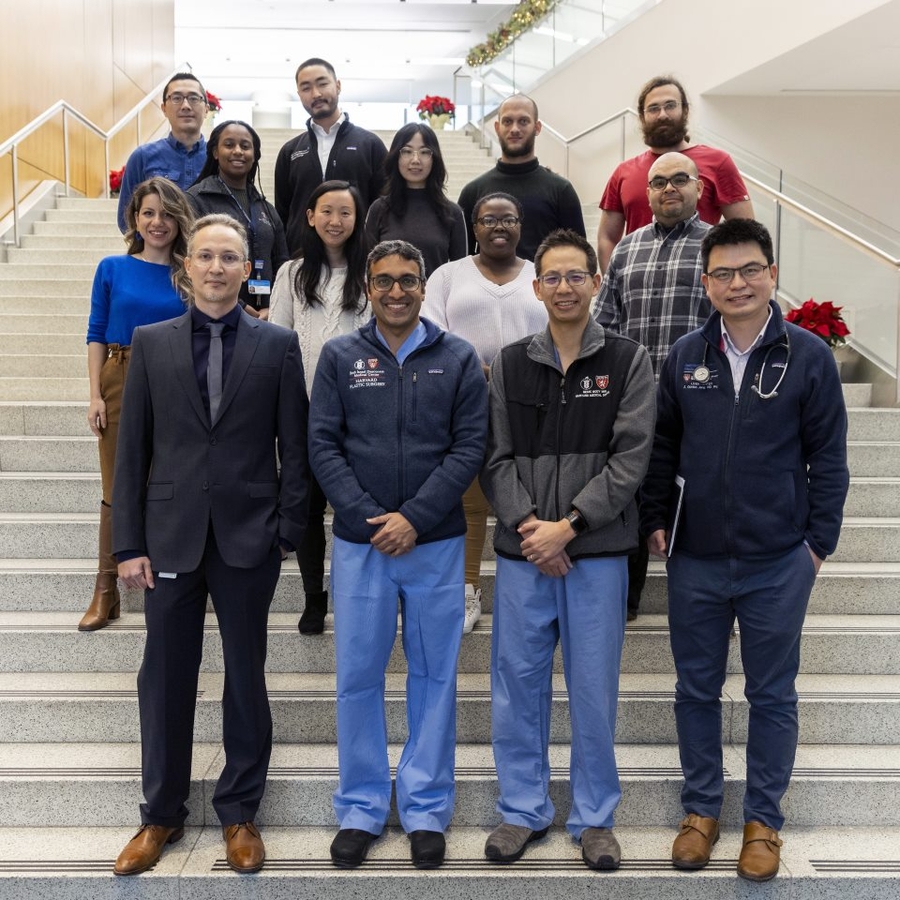
The Lymphatic TMC (Project number 5U54HL165440-04 funded by NHLBI of NIH) is a tissue mapping center responsible for mapping the human lymphatic vasculature system at gross anatomy down to the molecular level. We will receive a total of $4 million over four years to collect and analyze a range of lymphatic tissues from a diverse set of tissue donors. The Lymphatic TMC is composed of Contact-PI Dhruv Singhal, MD of the Boston Lymphatic Center at BIDMC; Co-PI Ioannis Vlachos, PhD of the Spatial Technologies Unit at BIDMC and Wyss Institute; Co-PI Young-Kwon Hong, PhD of BIDMC & HMS; Co-Investigator Leo Tsai, MD, PhD of BIDMC; Co-Investigator Maxim Itkin, MD of the University of Pennsylvania; Gordon Jiang, MD, PhD of BIDMC.
The team hopes that these findings will shed light on causes of lymphatic diseases, such as lymphedema, which affect 200 million people worldwide and is often a long-term side effect of breast cancer treatment. HuBMAP's support allows us to dive deep into discovering the origins of lymphatic diseases through mapping out a detailed anatomy of the lymphatic system. Our work can be used to develop novel approaches to treatment, care management, and prevention.
Read news about us
BIDMC Team Joins NIH Initiative Creating Human Cellular Map
BOSTON – Experts estimate that there are more than 37 trillion cells in the human body. The ways in which cells interact with each other impact a person’s health, though how they cooperate — or fail to, potentially leading to disease — is not always clear. In a monumental undertaking to learn more about the relationship between cell function and health, the National Institutes of Health (NIH) launched the Human BioMolecular Atlas Program (HuBMAP) to develop a framework for mapping the human body cell by cell. Now, a team led by researchers at Beth Israel Deaconess Medical Center (BIDMC) are joining the national program and will be the first HuBMAP group responsible for mapping human lymphatic system at the molecular level. Keep reading
BOSTON – Experts estimate that there are more than 37 trillion cells in the human body. The ways in which cells interact with each other impact a person’s health, though how they cooperate — or fail to, potentially leading to disease — is not always clear. In a monumental undertaking to learn more about the relationship between cell function and health, the National Institutes of Health (NIH) launched the Human BioMolecular Atlas Program (HuBMAP) to develop a framework for mapping the human body cell by cell. Now, a team led by researchers at Beth Israel Deaconess Medical Center (BIDMC) are joining the national program and will be the first HuBMAP group responsible for mapping human lymphatic system at the molecular level. Keep reading
View publications from the HuBMAP consortium

