Publications

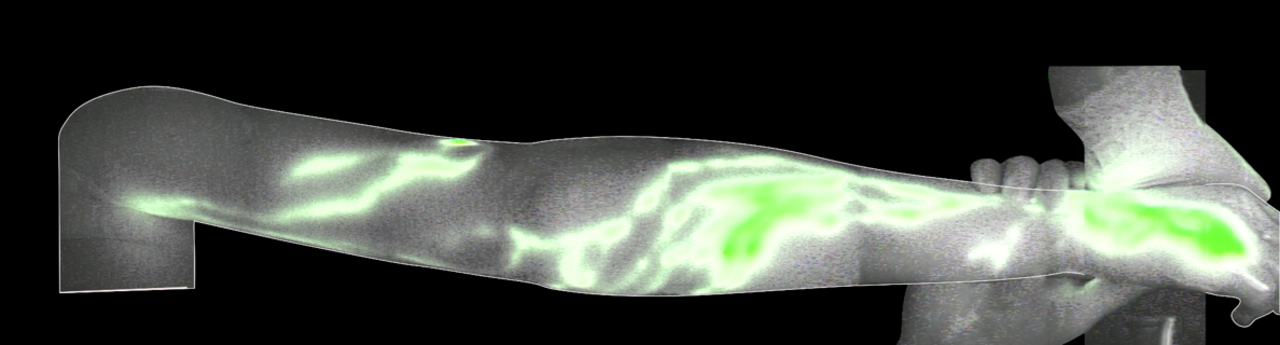
ICG Lymphography of the upper extremity

Publications

  • Westcott GP, Emont MP, Gulko A, et al. Single-nuclear transcriptomics of lymphedema-associated adipose reveals a pro-lymphangiogenic stromal cell population.. bioRxiv : the preprint server for biology. Published online Forthcoming. doi:10.1101/2025.02.18.638907

    Chronic lymphedema is a progressive, disfiguring disease that results from dysfunction of the lymphatic vasculature, causing distal accumulation of interstitial fluid, localized development of tissue edema, and expansion of subcutaneous adipose tissue (SAT). As the molecular mechanisms governing SAT remodeling in this disease are unclear, we performed single-nucleus RNA sequencing on paired control and affected SAT biopsies from patients with unilateral lymphedema. Lymphedema samples were characterized by expansion of SAA + adipocytes, pro-adipogenic stem cells, and proliferation of lymphatic capillaries. A GRIA1 + lymphedema-enriched stromal cell population expressing VEGFC , ADAMTS3 , and CCBE1 was identified, suggesting an enhanced axis of communication between adipose stem and progenitor cells (ASPCs) and lymphatic endothelial cells. Furthermore, lymphedema ASPC-conditioned media promoted lymphatic endothelial tube elongation in vitro . These findings indicate a critical role for ASPCs in regulating adipocyte differentiation and lymphatic vascular remodeling in lymphedema, and provide a valuable resource for better understanding this disease.

    See also: Anatomy & Function
  • Medline A, Hentati F, Pettinato A, et al. Evaluation of Patients Presenting to a Multidisciplinary Lymphatic Center.. The American journal of medicine. Published online 2026. doi:10.1016/j.amjmed.2026.03.007

    BACKGROUND: Lymphedema is a prevalent and underserved condition. Expanding diagnostic and therapeutic options have increased interest in multidisciplinary care. This study examines clinical characteristics and geographic patterns of lymphedema care within a multidisciplinary lymphatic center.

    METHODS: A retrospective review included all patients evaluated for edema at the BIDMC Lymphatic Center from January 2018 through December 2023. The multidisciplinary team comprised cardiovascular medicine, radiology, plastic surgery, and physical therapy. A RedCap registry captured demographics, clinical characteristics, imaging and surgeries. Patients were stratified by etiology as primary, secondary, or non-lymphatic edema. Bivariate and geospatial analyses assessed differences across groups and geographic access to care.

    RESULTS: Of the total 2,031 participants, 76% were female, with a mean age of 60 years (±15.2) and BMI of 33.6 kg/m2 (±10.7). The average duration of edema symptoms at evaluation was 9.47 years (±11.8). Secondary lymphedema was most common (n=1,104, 54%), often due to cancer (54%) or chronic venous disease (23%). Lymphatic imaging was performed in 549 patients (27%). Of those 549, lymphoscintigraphy (83%) and MRI (69%) were most common. Only 149 patients (11%) underwent surgery. Patients residing outside the state had longer symptom duration (12.3 vs 9.1 years, p<0.0001) and higher surgical rates (16.6% vs 6%, p<0.001) than those residing in-state.

    CONCLUSIONS: In this large, single-center description, over one-third of patients did not have lymphedema. Lymphatic imaging was frequently performed, though few underwent surgery. Geographic barriers delayed evaluation and increased surgical intervention, emphasizing the need for broader access to multidisciplinary lymphatic care.


  • Singhal D, Saini M, Ghosal S, et al. Cancer Stem Cells in Esophageal Squamous Cell Carcinoma: A Path to Understanding.. Current stem cell research & therapy. Published online 2026. doi:10.2174/011574888X389155260105191934

    The sixth most common cancer in developing countries is the esophageal squamous cell carcinoma (ESCC), with a poor prognosis because the 5-year survival rate of patients with ESCC is only 35%. The incidence of ESCC is influenced by various factors, including diet, genetics, environmental exposures, and socio-economic status; almost all biological drivers of ESCC involve cancer stem cells (CSCs), which drive tumor initiation, therapy resistance, recurrence, and metastasis. CSC-related biomarkers in ESCC provide useful information on prognosis, diagnosis, and treatment methods. The accessory characteristics that identify CSCs are unique enzymatic activity, surface markers, and drug resistance; hence, contributing to their ability to overcome traditional forms of chemotherapy and radiotherapy. These biomarkers not only enable the isolation of CSCs but are also highly correlated with the clinical outcome of ESCC. A multiconjugation of certain CSC markers can improve detection accuracy and inform more precise treatment strategies. In addition, the development of ESCC-specific CSC biomarkers has the potential to develop targeted immunotherapy, which will eventually result in better patient outcomes. A CSC-based therapeutic approach provides a holistic understanding of CSC biology and the development of comprehensive treatment options for ESCC. Although several studies have investigated CSCs across various contexts, a comprehensive review focusing on their role, biomarkers, and therapeutic potential in ESCC is currently lacking, and this review aims to address that gap.

  • Spiegel DY, Levey J, Keko M, et al. Radiation Dose and Lymphedema Risk After Immediate Lymphatic Reconstruction and Axillary Lymph Node Dissection.. International journal of radiation oncology, biology, physics. Published online 2026. doi:10.1016/j.ijrobp.2026.01.034

    PURPOSE: Regional nodal irradiation (RNI) increases breast cancer-related lymphedema (BCRL) following axillary lymph node dissection despite immediate lymphatic reconstruction (ILR). This study examines the relationship between radiation (RT) dose to the ILR anastomosis and BCRL.

    METHODS AND MATERIALS: This prospective study included 23 patients with invasive breast cancer who underwent axillary lymph node dissection/ILR followed by RNI. The anastomosis was indicated by a twirl clip, allowing for ILR contouring. The median RNI dose was 4000 cGy in 16 fractions. Lymphedema was defined as an increase in arm volume (10% dominant, 7% nondominant) in the affected extremity or a 10-point increase in Lymphedema Index plus patient-reported symptoms >6 months after RT completion. Dosimetric parameters included mean and maximum doses, V35, V40, Dmin<36.8Gy at the ILR site, ILR + 5 mm, and ILR + 2 cm expansion volumes.

    RESULTS: Median follow-up was 25.9 months (interquartile range, 22.8-33.9). Fourteen patients met criteria for lymphedema at >1 time point, but only 4 (17.4%) met criteria for BCRL at their last follow-up. Patients who developed lymphedema had higher mean dose (4135 cGy vs 1410 cGy; P = .006), V35 (89% vs 20%; P = .005), and V40 (84% vs 17%; P = .012) at the ILR + 2 cm volume compared with those who did not. These parameters remained significant after controlling for BMI and the number of nodes removed. Threshold doses for lymphedema risk were found for the ILR + 2 cm volume: mean dose, 3074 cGy (AUC = 0.86), with rates of lymphedema above and below the threshold at 92% versus 30%, P = .006; V35, 56% (AUC = 0.87), 92% versus 22%, P = .001; and V40, 50% (AUC = 0.83), 92% versus 30%, P = .006.

    CONCLUSIONS: Increasing RT doses to the ILR anastomosis site and the surrounding area increased lymphedema risk. Future studies will assess whether limiting the dose below these thresholds can lower BCRL rates while maintaining disease control.

  • Fuse Y, Fanning JE, Nistor A, Singhal D. Immediate Lymphatic Reconstruction: A Technical Modification Eliminating the U-Stitch With a Mini-Forceps.. Annals of plastic surgery. 2026;96(2):164-165. doi:10.1097/SAP.0000000000004634

    Immediate lymphatic reconstruction (ILR), originally described as the lymphatic microsurgical preventative healing approach (LYMPHA), reduces the risk of developing lymphedema secondary to breast cancer treatment. ILR involves the intussusception of arm lymphatic channels into a vein draining centrally. However, performing this technique in a deep surgical field is technically challenging. We introduce a technical modification to ILR by repurposing a pulmonary wire to facilitate the intussusception technique. Intraoperatively, fluorescein isothiocyanate (FITC) was injected into the first and forth webspaces on the dorsum of the hand and the volar wrist. A vein graft was harvested from the lower leg during the axillary lymph node dissection. The accessory branch of the axillary vein was isolated. Lymphatic channels were identified under a 560-nm filter in the axillary bed. The largest-diameter channel was selected and isolated. An anastomosis was performed between the vein graft and targeted lymphatic channel utilizing the intussusception technique. A mini-forceps was passed retrograde through the vein graft to grasp the lymphatic channel. The channel was then intussuscepted into the vein graft and released. The vein graft was sutured to the surrounding peri-lymphatic fat using 8-0 sutures. Lymphatic flow from the proximal end of the vein graft was confirmed with FITC imaging. The vein graft was then anastomosed to the accessory vein using a coupler device. Patency was confirmed by visualizing FITC dye crossing the anastomosis and filling the recipient vein. Use of mini-forceps in ILR improves lymphatic channel manipulation in a deep surgical field and eliminates the U-Stitch.

  • Fanning JE, Givant M, Chen A, et al. Major Anatomic Variations of the Upper Extremity Superficial Lymphatic System.. Plastic and reconstructive surgery. Published online 2026. doi:10.1097/PRS.0000000000012827

    BACKGROUND: Lymphatic anatomy has primarily been described in cadaveric dissections. Mapping of the upper extremity superficial lymphatic system with indocyanine green (ICG) lymphography provides functional insights and detail to major anatomic variations.

    METHODS: Healthy female volunteers underwent lymphatic mapping of the upper extremities with ICG lymphography. ICG was injected in six standard sites in the hand/wrist and upper arm. Major anatomic variations of four main forearm pathways and connectivity to four upper arm pathways were described.

    RESULTS: 90 arms of 45 volunteers were included. The posterior radial channel predominantly courses in the dorsal forearm (98%). The posterior ulnar forearm pathway courses in the dorsal forearm in the majority of arms (70%). The anterior radial and anterior ulnar forearm channels exclusively course in the volar forearm (100%). The posterior radial pathway connects to the bicipital (80%), lateral (48%), medial (9%), and tricipital (7%) upper am pathways. The posterior ulnar pathway connects to the lateral (54%), tricipital (51%), medial (21%), and bicipital (14%) upper arm pathways. The anterior radial pathway connects to the medial (50%) and bicipital (60%) pathways. The anterior ulnar pathway connects to the medial (54%) and bicipital (59%) pathways.

    CONCLUSIONS: Upper extremity lymphatic drainage to the lateral and tricipital pathways is enabled exclusively by the dorsal forearm channels suggesting their importance in BCRL risk. Variations of upper extremity lymphatic anatomy are relevant to the risk, prevention, and treatment of breast cancer-related lymphedema risk and warrant further study.

  • Fanning JE, Aly MAI, Chang DW, et al. A Proposed Minimum Standard Set of Outcome Measures for Lymphatic Surgery: Results of a Modified Delphi Process from the Society of Lymphatic Surgery Leadership.. Plastic and reconstructive surgery. Published online 2025. doi:10.1097/PRS.0000000000012793

    BACKGROUND: Despite advancements in the surgical treatment and prevention of lymphedema, there are no standards for reporting outcomes of lymphatic surgery. Developing consensus on a minimum standard set of outcome measures for lymphatic surgery represents an important step toward standardizing treatment options and comparing patient outcomes between institutions.

    METHODS: A modified Delphi method with an expert panel of five Society of Lymphatic Surgery (SLS) board members was conducted. Participants completed two rounds of virtual, anonymous surveys from February 2024 to March 2024. Participants rated outcome measures to develop consensus for their inclusion in a minimum standard set. The initial list was developed from outcome measures voted upon at an SLS panel during the 2023 American Society of Reconstructive Microsurgery (ASRM) meeting. Results were analyzed using predefined criteria to establish the core set of outcome measures.

    RESULTS: The expert panel completed two rounds of surveys, including six baseline characteristics for lymphatic surgery to establish a minimum standard set of outcome measures. Characteristics included compression, limb volume measurements, patient-reported outcome measures, cellulitis, follow-up time, and lymphedema surveillance parameters. Consensus was not reached in how to best measure time in compression or the L-dex diagnostic threshold for lymphedema surveillance programs.

    CONCLUSION: The SLS leadership established a first minimum standard set of outcome measures for lymphatic surgery with six baseline characteristics for evaluating outcomes of lymphatic surgery. This outcome set will support the collection of meaningful data to further standardize lymphatic surgery approaches for the treatment and prevention of lymphedema.

  • Ruscic KJ, Singh R, Liu L, et al. Selective Activation of Na V 1.3 Restores Lymphatic Contractility in Age and Injury.. bioRxiv : the preprint server for biology. Published online 2025. doi:10.64898/2025.12.15.694435

    BACKGROUND: Intrinsic lymphatic contractility is essential for tissue fluid balance, immunity and organ function, yet no FDA-approved pharmacologic treatments specifically restore lymphatic contractility. Lymph is returned to the circulation by ion channel-driven cyclic contractions of collecting lymphatic vessels. Although voltage-gated sodium (Na V ) channels drive cardiomyocyte excitability, their role in lymphatic muscle cell (LMC) physiology is not well defined. We identified Na V 1.3, a Na V channel historically viewed as developmentally restricted and limited in adult tissues, as unexpectedly and selectively expressed in adult lymphatic muscle but absent from heart, vascular smooth muscle, and mature brain. We tested whether selective Na V 1.3 activation restores impaired lymphatic pumping in aging and radiation injury.

    METHODS: Na V 1.3 expression in LMCs was confirmed through single-cell RNA sequencing analysis and immunostaining of mouse and human lymphatic vessels. Lymphatic contractility was quantified by in vivo fluorescence lymphangiography and interstitial fluid clearance was measured with a new bioluminescence assay. Na V 1.3 function was assessed in young, aged, and radiation-injured mice. Na V 1.3 knockout ( Scn3a -/- ) mice established the requirement of Na V 1.3 for basal lymphatic excitability and responsiveness to the Na V 1.3-specific activator, Tf2.

    RESULTS: In mouse and human lymphatic vessels, Na V 1.3 is expressed in adult LMCs. Although dispensable for basal lymphatic contractions, Na V 1.3 acted as a pharmacologically recruitable reserve that amplified contractile output. Acute Na V 1.3 activation with Tf2 increased lymphangion ejection fraction and accelerated interstitial fluid clearance. Tf2 fully restored lymphatic pumping in aged mice and partially rescued radiation-induced contractile deficits. All Tf2 responses were abolished in Scn3a -/- mice, confirming Na V 1.3 dependence.

    CONCLUSIONS: Na V 1.3 is a selectively druggable ion channel in adult lymphatic muscle that can be recruited to restore lymphatic pump function across aging and injury. Targeted Na V 1.3 activation provides a molecular entry point for treating diseases characterized by lymphatic pump failure, a domain with no existing pharmacologic therapies.

  • Fanning JE, Bustos V, Jang P, et al. Key refinements to a large animal model for measurement of real-time lymphatic transport.. BMC medical imaging. 2025;26(1):42. doi:10.1186/s12880-025-02057-6

    BACKGROUND: The inability to directly measure real-time lymphatic transport hinders our understanding of lymphatic disorders and effective monitoring of therapeutic interventions. Here, we report three refinements to the use of novel near-infrared fluorophores in a large animal model for assessment of lymphatic function using optical fluorescence with the ultimate goal of direct clinical translation.

    METHODS: A lymphadenectomy and lymphovenous bypass was performed in the left groin. Two different near-infrared (NIR) fluorophores composed of the identically same scaffold were injected into the respective hind limbs of female swine. Transit from injection sites into the lymphatic system and systemic circulation was assessed over three hours of NIR imaging immediately following injections. Albumin-conjugated fluorophores with 700 nm and 800 nm emission, respectively, were delivered with manual intradermal injection. Blood and urine samples were collected at standard time points. Continuous NIR imaging of the lymphovenous bypass and the superficial epigastric vein and its adjacent skin was also performed at standard time points. Blood and urine samples were collected to analyze systemic concentrations and renal excretion of both fluorophores, respectively. NIR imaging was performed to analyze real-time lymphatic transport of the fluorophores through the lymphovenous bypass and in the central circulation.

    RESULTS: Fluorophore pharmacokinetics with albumin conjugation and manual intradermal injections produced inconsistent results. Three modifications to the study protocol were designed. Fluorophores were modified from albumin conjugation to polyethylene glycol (PEG) conjugation. Fluorophores were delivered with VAX-ID ® devices instead of manual intradermal injections. Additionally, a novel correction factor was developed to account for differences in NIR fluorescence between the fluorophores.

    CONCLUSION: The refinement of a large animal model to assess real-time lymphatic function represents a crucial step toward clinical translation. The optimized fluorophore composition and delivery mechanism captures dynamic changes in lymphatic function.

    SUPPLEMENTARY INFORMATION: The online version contains supplementary material available at 10.1186/s12880-025-02057-6.

  • Hentati F, Donohoe K, Weinstein J, et al. Multidisciplinary approach to lymphedema diagnosis and management.. Seminars in vascular surgery. 2025;38(4):386-394. doi:10.1053/j.semvascsurg.2025.09.002

    Lymphedema is a chronic, progressive condition characterized by the accumulation of protein-rich interstitial fluid due to impaired lymphatic transport. It significantly impairs quality of life and presents complex diagnostic and therapeutic challenges. Despite its prevalence, lymphedema remains underdiagnosed and undertreated, in part due to limited provider education and a lack of access to coordinated care. For this reason, a multidisciplinary approach to lymphedema management is crucial. Early diagnosis is critical and requires collaboration across primary care, oncology, vascular medicine, radiology, lymphatic therapy, and surgery. There are increasing imaging techniques available, but require unique skill sets to perform and interpret. Similarly, there are growing surgical treatment options, but conservative therapy remains the mainstay for most patients. A structured, collaborative model is essential for high-quality, patient-centered lymphedema care. Establishing multidisciplinary lymphedema centers can enhance outcomes, reduce delays, and promote innovation in treatment strategies.