OBJECTIVE: We evaluated whether superficial lymphatic anatomy and functional lymph node drainage are symmetric between the right and left upper extremities of healthy female volunteers, and if handedness is associated with symmetry of superficial lymphatic anatomy.
BACKGROUND: Symmetry of lymphatic anatomy has been assumed historically. This assumption of individual anatomic symmetry is being utilized clinically and in research without validation.
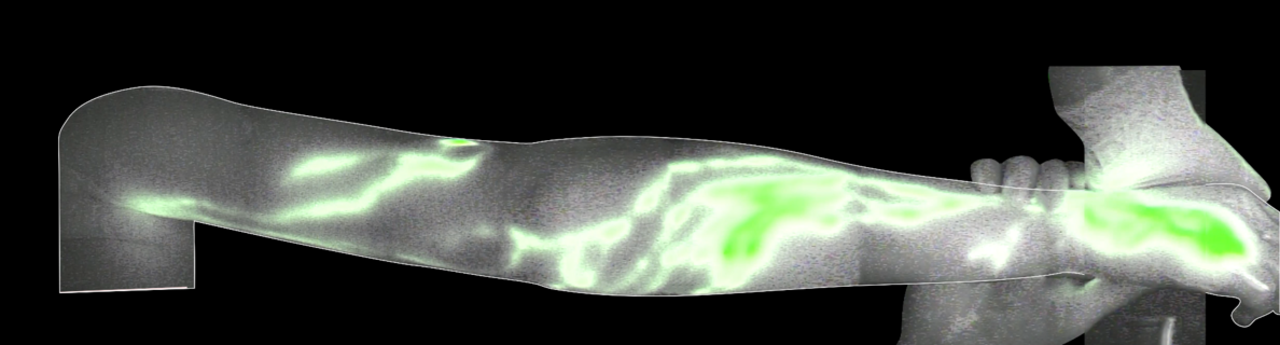
METHODS: 36 normal female volunteers underwent bilateral indocyanine green (ICG) lymphography and lymphoscintigraphy of the upper extremities. Eight collecting vessel pathways of each upper extremity were mapped on ICG lymphography. 13 lymph node groups were visualized on lymphoscintigraphy. Symmetry of lymphatic anatomy and functional drainage were established by comparing the right and left extremities of each participant. Hand dominance was assessed by hand grip strength on a hand dynamometer.
RESULTS: Among the 36 participants, 10 (28%) showed symmetry of all eight upper extremity lymphatic pathways with ICG. However, only 1 (3%) participant demonstrated complete symmetry amongst the 13 lymph node groups. Total symmetry of lymphatic channels was observed on ICG in seven (39%) participants with hand dominance and three (17%) participants without hand dominance (X2 = 2.215, P = 0.137).
CONCLUSION: Lymphatic anatomy and functional drainage of the upper extremities are not consistently symmetric. Functional nodal drainage as demonstrated by lymphoscintigraphy shows less symmetry than anatomic studies of lymphatic channels using ICG. Symmetric lymphatic anatomy does not appear to correlate with hand dominance. These findings challenge the prevailing assumption of left-right lymphatic symmetry.