
Our team is dedicated to advancing the future of clinical electrophysiology through involvement in a wide variety of research activities.
Mechanisms and Physiology of Arrhythmias
Mapping Targeting Wavefront Discontinuities to Improve VT Substrate Ablation
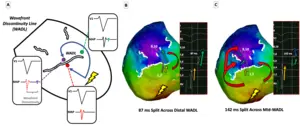
BIDMC VT Center researchers have developed a novel functional substrate mapping technique for VT ablation that identifies fixed lines of conduction block during baseline rhythm that correlate to the arrhythmogenic substrate. This technique allows for a focused functional substrate ablation to allow for a shorter, safer VT ablation with reduced need for VT induction.
Evaluation of New Mapping and Ablation Technology
Reducing Hemodynamic Instability in VT Ablation
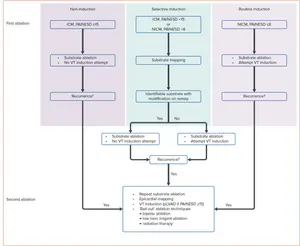
BIDMC VT Center researchers are dedicated to refining the VT ablation procedure to reduce acute hemodynamic decompensation caused by protracted procedures with repeated induction of untolerated VTs. By using patient and substrate risk stratification, VT Center faculty are studying acute procedural and longitudinal outcomes comparing a standard induction versus minimal induction strategy.
Advanced Imaging Integration in VT Ablation
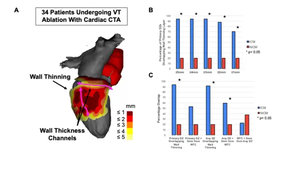
BIDMC VT Center researchers have examined the utility of pre-procedural cardiac CT 3D scar reconstructions in predicting the arrhythmogenic substrate during VT ablations. The correlation between areas of slow conduction and wall thinning are high in infarct cardiomyopathy patients, and pre-procedural imaging may allow for more focused substrate mapping during VT ablation procedures.
Registry Analysis of Electrophysiology Procedures
Clinical Trials
Artificial Intelligence and Complex Analyses of ECGs
Animal Lab and Translational Research
The Smith Center for Outcomes Research
The mission of the Richard A. and Susan F. Smith Center for Outcomes Research is to apply the highest standards of scientific evaluation to essential questions in cardiovascular medicine. We combine state-of-the-science methods with deep clinical expertise to understand and improve patient outcomes and advance population health.
At the Smith Center, we are committed to applying the highest scientific standards to tackle key questions in cardiovascular medicine. By combining analytical methods with our clinical expertise, we strive to improve patient outcomes and advance the delivery of healthcare.
The Smith Center has been a leader in evidence-based cardiovascular research, thanks to the generosity of Richard A. and Susan F. Smith. Their support has enabled us to pursue our goal of transforming cardiovascular care in the United States.
HTEI works closely with Smith Center investigators, including Dr. Daniel Kramer, Dr. Enrico Ferro, and Dr. Peter Brodeur.
Learn more about The Smith Center here.
