
Up to 60% of survivors have upper limb impairment at six months following a stroke.
What is Ongoing Upper Limb Impairment?
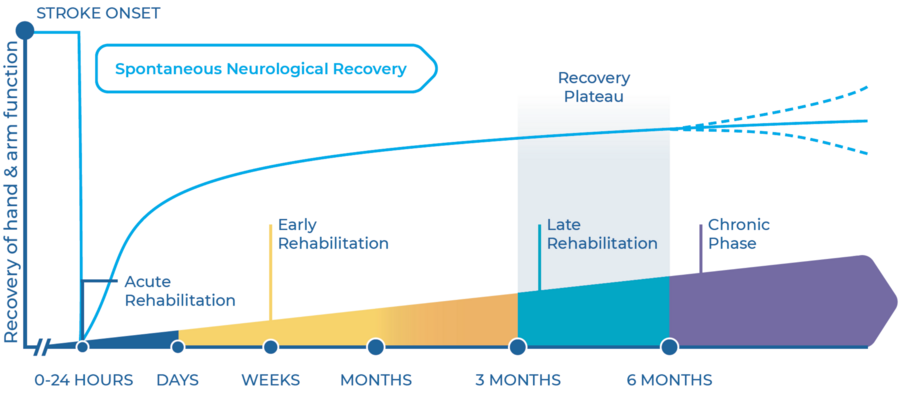
A common long-term symptom of stroke is long-term difficulty using the hand and arm (often called upper limb impairment). Millions of people live with these stroke-related upper limb impairment disabilities. During an ischemic stroke, a blood clot blocks blood flow in the brain, leading to brain cell death. This damage results in varying levels of impaired movement, as well as speech and cognitive issues. Most motor function improvement occurs within the first 3 months after a stroke due to an increase in the brain’s neuroplasticity, or the natural ability of the brain to relearn motor movements. After the initial stage of recovery and regaining movement, many stroke survivors enter a period in which progress may seem to slow down. This occurs about 3-6 months after the stroke, but improvement of the affected side can continue. This period, called a recovery plateau, can create new frustrations from the lack of recovery. Paired VNS may improve recovery of upper limb function.
Vivistim Sytem: Paired VNS for stroke recovery
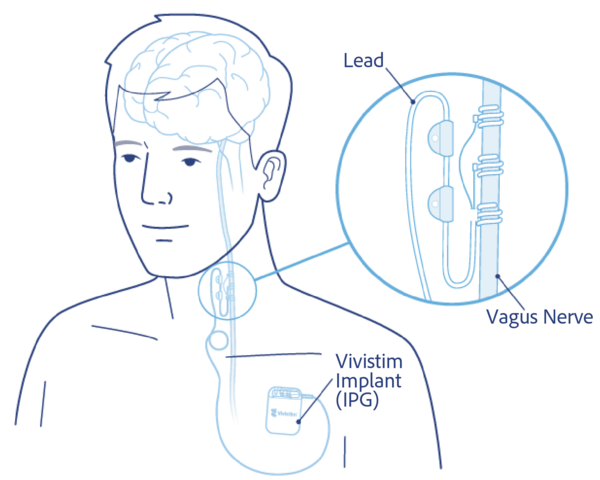
The Vivistim System helps increase the body’s own ability to utilize neuroplasticity to help regain hand and arm movements. The Vivistim System uses vagus nerve stimulationpaired with movements to strengthen brain connections needed to regain arm and hand function. During rehabilitation exercises, Vivistim delivers a pulse to help the brain strengthen or create new neural pathways, like building a new bridge to bypass the damaged area. The Vivistim device is implanted just under the skin with 2 small incisions in a same-day outpatient procedure.
System Components
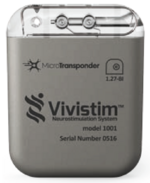
Implanted Pulse Generator (IPG)
Battery-powered implant, typically placed in the chest (left side), that delivers stimulation to the vagus nerve through the lead, and programmed by clinicians and therapists.
Lead
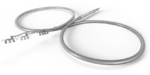
An implanted part of the system, typically placed in the left side of the neck, that delivers the mild electrical pulses from the IPG to the electrodes attached to the vagus nerve.
Magnet
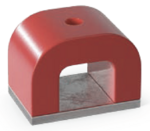
Used to activate the Vivistim System at home with a simple swipe. When placed and held over the implant, the magnet stops all stimulation (turns the IPG off).
Remote and Laptop
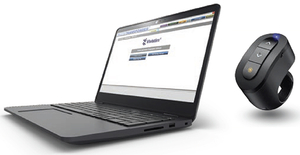
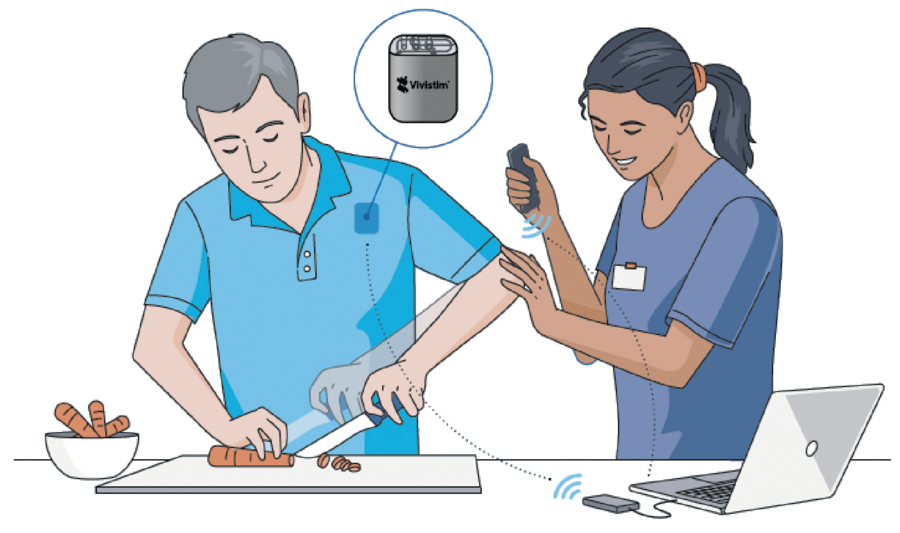
Used by a therapist to program the IPG and activate vagus nerve stimulation during in-clinic therapy.
Therapy Overview
The Vivistim System works with rehabilitation therapy to strengthen brain connections needed to regain hand and arm function.
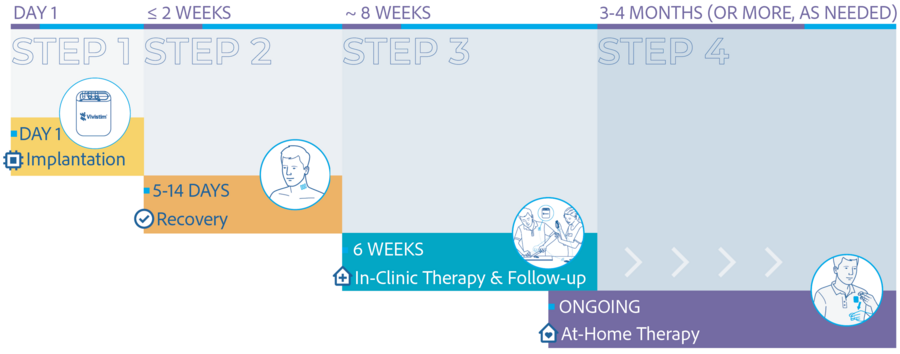
After recovery from the implantation procedure, your therapist works with you to set a rehabilitation schedule. Prior to starting therapy, your clinician will verify proper operation of the implant and program implant settings.
When the device is activated, a mild electrical pulse is sent to the vagus nerve in your neck. Most users don’t feel this, though some have described it as a slight tickle.
Stimulating the vagus nerve will increase neuroplasticity and create new pathways for improved movement. Following a consistent therapy schedule is crucial to getting the most improvement out of your rehabilitation efforts.
In-Clinic Therapy
In-clinic rehabilitation sessions are typically 90 minutes each, 3 times per week for 6 weeks. The sessions are focused on active movement with simultaneous vagus nerve stimulation from the Vivistim System. During rehabilitation sessions, you can expect to perform real-world hand and arm movements such as cutting food, doing puzzles, folding clothes, or dressing. As you perform the directed exercises in the clinic, the therapist will simultaneously activate stimulation using the remote. To maximize the benefits of therapy, you will be assigned rehabilitation tasks to perform at home.
At-Home Therapy
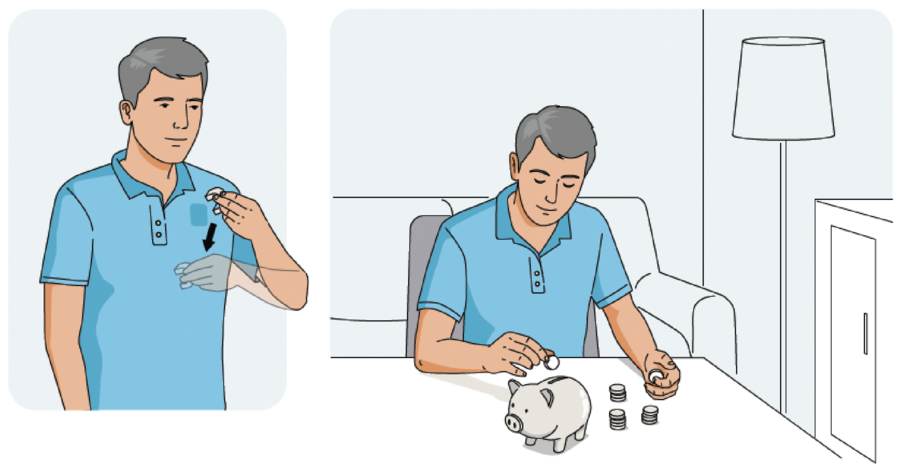
You can activate the system with the Magnet at home, during rehab exercises or daily activities, as you work to continue improving what matters to you most. To activate the system at home, swipe the Magnet once across your chest, above where the IPG is implanted. Stimulation begins immediately following the Magnet swipe and lasts for 30 minutes. Begin your rehabilitation tasks immediately after the Magnet swipe and continue your rehabilitation tasks throughout the 30 minutes of the stimulation session.
Frequently Asked Questions
How do I find out if I am eligible for Vivistim Paired VNS Therapy?
To determine if you are eligible for Paired VNS Therapy, you will undergo an initial assessment with a physical or occipational therapist to evaluate your current hand and arm function. You will then be seen by a neurosurgeon to determine if you are a good candidate for the implantation procedure.
Can I feel the implant?
Most people will not feel the implant under their skin. Immediately after the procedure, you may have some soreness in your upper chest where the device was implanted, but it should resolve within 2 weeks.
What sort of improvement can I expect?
Response to treatment varies for each person. In a clinical trial, Paired VNS Therapy study subjects experienced 2-3 times more improvement in hand and arm function than those who received intense rehabilitation therapy without Paired VNS.
How quickly will it work?
In a clinical trial, Paired VNS Therapy study subjects reported improvement as early as 3 weeks, but results vary.
How long does the battery last?
The battery is expected to last about 5 years.
Are there side effects?
Some common side effects of VNS Therapy include hoarseness, shortness of breath, throat irritation, pain, and coughing. Infection is a risk of any implanted device.
Does Paired VNS Therapy use medication?
No. Paired VNS Therapy is an implanted device and system used in conjunction with rehabilitation therapy.
Can I travel?
Yes. There are no specific travel restrictions. Flying will not affect the system or the delivery of stimulation. You may want to inform airport security that you have an implant. Metal detectors are not expected to affect the system.
Are there any restrictions after the surgical procedure?
Once you have the Vivistim System, you should not undergo two specific interventions, diathermy and vagotomy.
Are there MRI restrictions?
Certain types of MRI can be performed, provided specific guidelines are followed. For questions contact Dr. Aronson or Vivistim.
Will my Vivistim Implant turn on if I walk past a magnet, like one on a refrigerator?
Walking past a household magnet will not affect an implanted device. Household magnets are generally not strong enough to activate the device.
