
Adult Cardiothoracic Anesthesia Fellowship
Overview and Goals
The Adult Cardiothoracic Anesthesia (ACTA) Fellowship at Beth Israel Deaconess Medical Center is designed to develop experts and future leaders in the field of cardiac anesthesia. By exposing fellows to a broad range of clinical cases, delivering a robust educational curriculum, fostering scholarly activity, and supporting professional growth, our program provides a strong foundation in the perioperative management of patients undergoing both cardiac surgical procedures and percutaneous cardiac interventions.
The ACTA Fellowship at Beth Israel Deaconess Medical Center emphasizes not only mastery of current standards of care but also the ability to adapt to innovations and future changes in the field. Our objective is to prepare fellows for independent practice by combining broad clinical exposure with structured education, advanced echocardiography training, simulation, and opportunities for both mentorship and independent learning.
Fellowship Faculty

Adult Cardiothoracic Fellows



Eligibility/How to Apply/Contact Information
The Adult Cardiothoracic Fellowship participates in the Match with the Society of Cardiac Anesthesiologists (SCA) using the San Francisco Match.
For applicants applying for the 2-year Dual Adult Cardiothoracic and Critical Care Medicine Fellowship:
- Complete an application for both Adult Cardiothoracic Fellowship and Critical Care Medicine through the San Francisco Match.
- Complete this supplementary form and email it to the program coordinator.
Program Director
Fellowship Coordinator
Objectives
The fellowship is built around four core pillars:
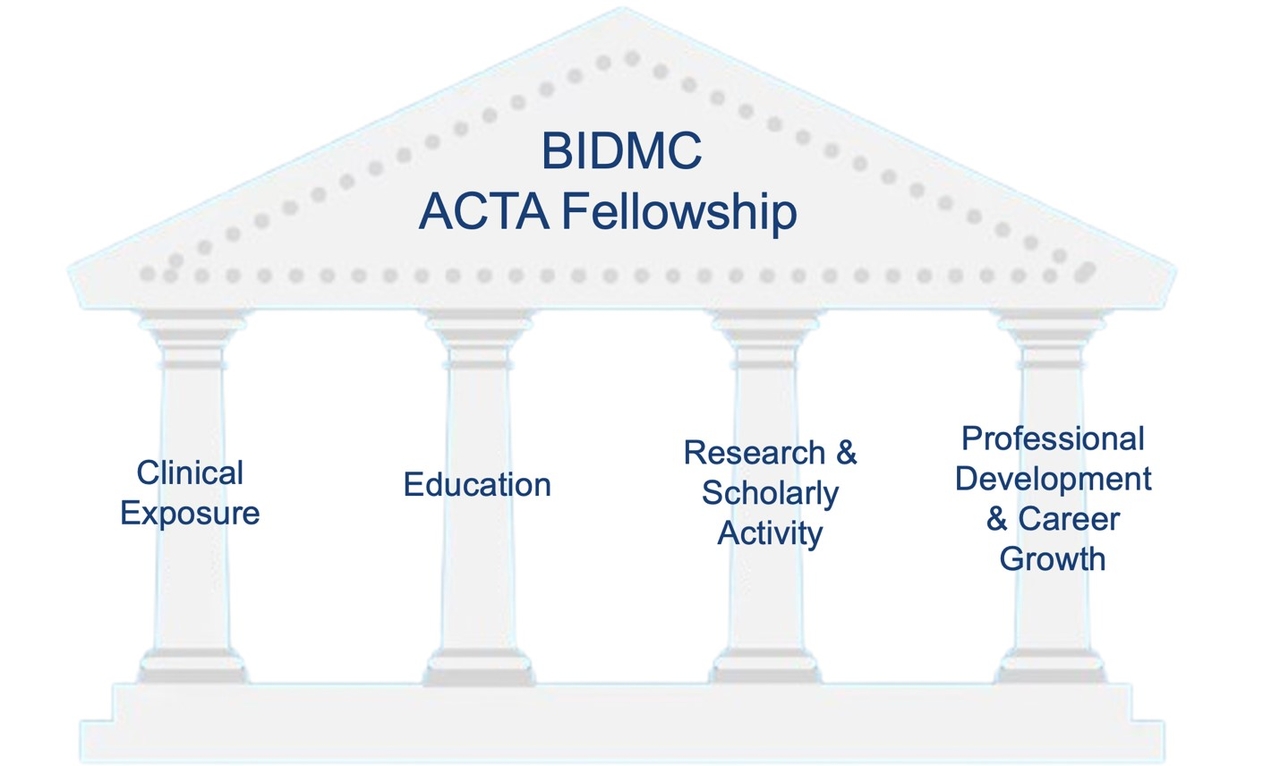
- Clinical Exposure – Fellows gain extensive experience in the management of patients undergoing a wide variety of cardiac surgical and percutaneous procedures, including complex and high-acuity cases.
- Education – A structured didactic curriculum, case-based learning, and regular echocardiography review sessions ensure mastery of cardiac anesthesia principles and perioperative imaging.
- Scholarly Activity – Fellows are encouraged and supported to engage in academic pursuits, including clinical research, presentations at national meetings, and contributions to scholarly publications.
- Professional Advancement – Through mentorship, leadership opportunities, and career development support, fellows are guided to become not only skilled clinicians but also future leaders in the field.
By the completion of the fellowship, graduates are prepared to:
- Practice independently as cardiothoracic anesthesiologists.
- Sit for the American Board of Anesthesiology Adult Cardiac Anesthesiology (ABA ACA) examination.
- Achieve board certification in perioperative transesophageal echocardiography (PTE) by successfully completing the National Board of Echocardiography (NBE) Advanced Examination of Special Competence in Advanced Perioperative Transesophageal Echocardiography (PTEeXAM).
Rotations and Schedules
The ACTA Fellowship provides a balanced rotation schedule designed to give fellows comprehensive exposure to all aspects of adult cardiothoracic anesthesiology.
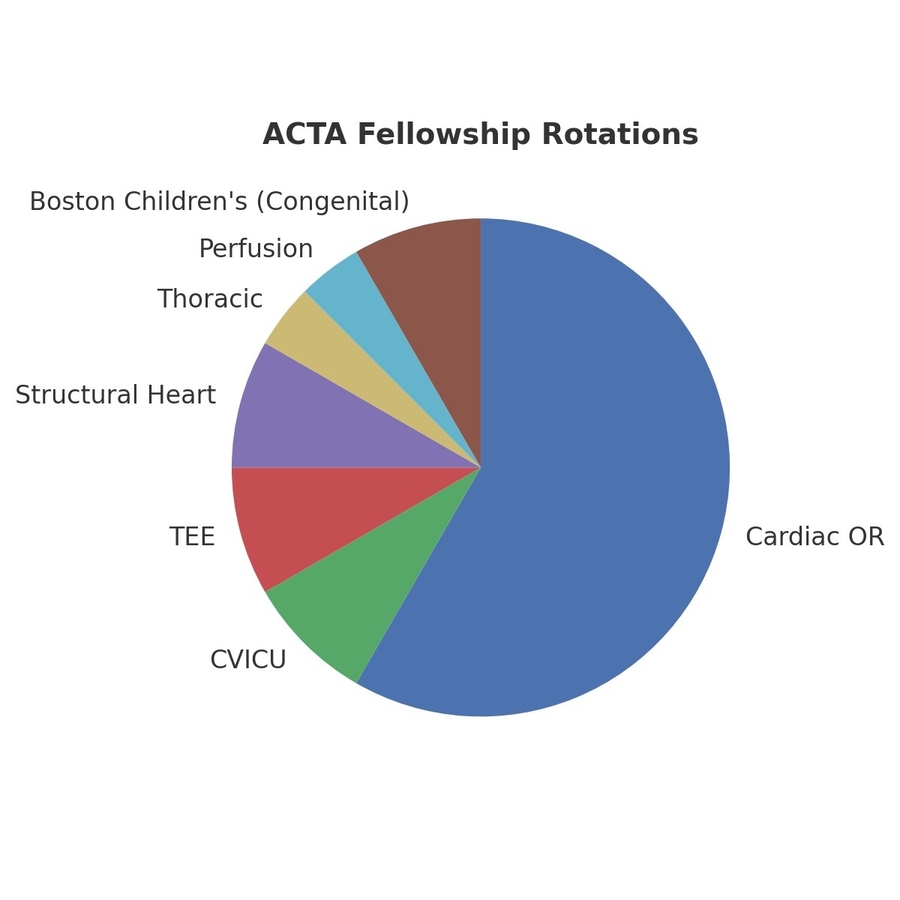
- Cardiac OR (7 months): The core of the fellowship is spent in the cardiac operating rooms, where fellows manage patients undergoing a wide variety of cardiac surgical procedures, from routine cases to complex, high-acuity operations.
- Cardiovascular Intensive Care Unit (1 month): Fellows gain experience in the perioperative and critical care management of patients following cardiac surgery, with emphasis on hemodynamic support, advanced monitoring, and multidisciplinary care.
- Dedicated TEE Rotation (1 month): This rotation focuses on advanced echocardiography skills, allowing fellows to perform, interpret, and integrate perioperative TEE into clinical decision-making.
- Structural Heart Disease (1 month): Fellows participate in cutting-edge percutaneous interventions such as TAVR, MitraClip, and other transcatheter procedures, with emphasis on perioperative management and imaging guidance.
- Boston Children’s Hospital – Congenital Cardiac Anesthesia (1 month): Fellows rotate at Boston Children’s to gain exposure to congenital cardiac anesthesia, enhancing their understanding of pediatric cardiac physiology and management of complex congenital heart disease.
- Thoracic Surgery (2 weeks): A focused rotation providing experience in anesthesia for complex thoracic procedures, including lung resections and mediastinal surgery.
- Perfusion (2 weeks): Fellows spend time directly with the perfusion team to gain a deeper understanding of cardiopulmonary bypass, ECMO, and mechanical circulatory support, reinforcing the physiology and practice of extracorporeal support.
Curriculum and Didactics
The education curriculum for ACTA fellows combines faculty-led didactic sessions along with cultivating a culture that fosters curiosity, inquiry, and self-directed learning. In addition to daily one-on-one teaching with faculty in the cardiac ORs, fellows participate in structured academic days designed to provide both depth and variety in educational experiences.
- Tuesday Mornings – Cardiac Division Faculty Hour
A weekly session featuring faculty-led lectures, interactive case discussions, journal club presentations, and other academic activities aimed at strengthening clinical knowledge and critical thinking. - Wednesdays – Protected Academic Day for Fellows
Fellows are relieved of clinical duties to focus on independent reading, quality improvement projects, scholarly activity, and professional development. - CAFÉ (Cardiac Anesthesia Fellow Education) Wednesdays
Each Wednesday also includes our CAFÉ series, consisting of a structured didactic lecture followed by a faculty-led echocardiography review session.
In addition to in-person teaching, the department maintains an in-house learning management system (LMS) with continuously updated review content aligned to both the ABA Adult Cardiac Anesthesiology (ACA) exam and the NBE Advanced Examination of Special Competence in Advanced Perioperative Transesophageal Echocardiography (PTEeXAM). Fellows also have full access to the Harvard Medical School online library, ensuring availability of the latest scholarly articles and educational resources.
Research and Other Opportunities
The Department of Anesthesia at BIDMC, and specifically the Division of Cardiac Anesthesia, maintains an active and diverse research portfolio with projects both ongoing and in development. Faculty within the division are engaged in basic science, clinical, and data-driven investigations, and many hold active research grants supporting this work.
Several established research groups contribute to the division’s academic output, including:
- The Valve Research Group led by Dr. Feroze Mahmood
- The Sadhguru Center led by Dr. Balachundhar Subramaniam
While the primary focus of the ACTA Fellowship at BIDMC is clinical training, fellows are strongly encouraged to participate in ongoing research projects. Those with a particular interest in academic investigation may pursue additional opportunities through the division’s research mentorship program, which provides guidance, structure, and support for scholarly development.
Fellows are also encouraged to present their work — whether quality improvement initiatives, case-based scholarship, or original research — at regional and national meetings, including the Society of Cardiovascular Anesthesiologists (SCA) Annual Meeting.
