
Advanced Perioperative Clinical Anesthesiology Fellowship
Overview and Goals
The mission of this non-ACGME accredited Fellowship in Advanced Perioperative Clinical Medicine is to train anesthesiologists proficient in the management of basic to most advanced monitoring techniques in the perioperative arena and clinical application of perioperative ultrasound. At the end of this one-year fellowship, the trainee will be an advanced perioperative clinical leader with expertise in practice management, innovative educational techniques, and advanced or management of complex cases.
Current accredited anesthesia residency programs have a comprehensive scope of practice, but advances in technology and monitoring techniques often preclude in-depth training in these modalities. The case mix can be variable, with high risk patients undergoing low risk surgeries with monitored anesthesia care sometimes requiring transfer to general anesthesia urgently or emergently. Current anesthesia training uses a silo-based model with limited cross pollination. This fellowship breaks the model of working in silos and trains anesthesiologist to transition smoothly from a procedure of toe amputation under regional anesthesia to an endovascular/open thoraco-abdominal aortic aneurysm repair requiring invasive hemodynamic and neurological monitoring.
Trainees will learn to manage ventricular assist devices while taking care of a patient undergoing endoscopy or thoracotomy for lung resection. In the current era, continuous anesthetic involvement in the perioperative arena, from preoperative risk stratification, perioperative management to postoperative care, requires an anesthesiologist proficient in managing complex patient comorbidities such as pulmonary hypertension, critical aortic stenosis or morbid obesity. Hence, anesthesia personnel must know how to obtain and utilize the data necessary for both risk assessment and optimal management, which increasingly requires clinical ultrasound and echocardiography. The current education/training model is sporadic and proficiency is difficult to demonstrate to a level that allows the clinician to practice confidently and independently. In order to develop the set of clinical skills (e.g., regional anesthesia, invasive monitoring, clinical ultrasound, echocardiography, management of ECMO and ventricular assist devices) to be fully effective perioperative physicians, additional training beyond residency is highly beneficial.
In addition to integrating advanced technologies into the care of complex patients, future leaders must be able to teach and disseminate their knowledge and approaches to patient care. Multimodal approaches to education including online, live lecture, and simulation require training in order to learn to incorporate these approaches to adult learning. Development and incorporation of assessment tools are likewise critical to ensure the successful uptake of new approaches to care. This fellowship will develop an Advanced Perioperative Clinical Anesthesiologist able to provide the highest level of clinical care and also train the next generation.
Goals
During fellowship training, the graduating fellow will:
- Gain expertise in preoperative, intraoperative, and postoperative management of high-risk patients undergoing non-cardiac procedures
- Gain expertise in advanced monitoring and management devices e.g., ventricular assist devices, spinal drains, pacemakers, hybrid OR with stand-by pump through participation in high-risk surgeries.
- Be highly skilled in the use of clinical ultrasound for high-risk patients undergoing non-cardiac procedures.
- Master the fund of knowledge to participate as a consultant in a multi-disciplinary team caring for high-risk patients undergoing non-cardiac procedures.
- Become an innovative academic leader who can apply multimodal, competency-based educational programs, and interactive teaching tools to the training of residents and faculty.
- Become a clinical leader and have expertise in practice management.
Advanced Perioperative Clinical Anesthesia Fellowship


How to apply/Contact Information
- Completion of residency training in Anesthesiology in an Accreditation Council for Graduate Medical Education (ACGME), ACGME-International (ACGME-I) or Royal College of Physicians and Surgeons of Canada (RCPSC) accredited training program; or
- Equivalent non-ACGME residency to include:
- Completed a residency program in the core specialty outside the continental United States that was not accredited by the ACGME, AOA, ACGME-I, RCPSC or CFPC.
- Demonstrated clinical excellence, in comparison to peers, throughout training. Additional evidence of exceptional qualifications is required, which may include one of the following:
- Participation in additional clinical or research training in the specialty or subspecialty
- Demonstrated scholarship in the specialty or subspecialty;
- Demonstrated leadership during or after residency. Applicants being considered for these positions must be informed of the fact that their training may not lead to certification by ABMS member boards or AOA certifying boards.
- In recognition of the diversity of medical education and training around the world, this early evaluation of clinical competence required for these applicants ensures they can provide quality and safe patient care. Any gaps in competence should be addressed as per policies for fellows already established by the program in partnership with the Sponsoring Institution
- If needed have a valid ECFMG certification either with no expiration date or if the certificate has an expiration date an extension letter from the ECFMG will need to be submitted also.
- Be eligible for a Massachusetts Limited Medical License and J1 visa (if needed).
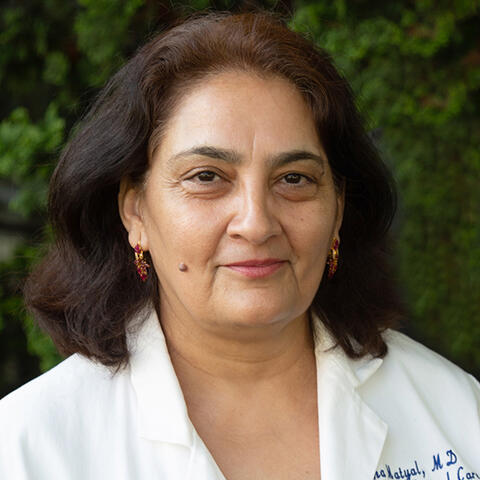
To apply contact Dr. Robina Matyal at rmatyal1@bidmc.harvard.edu
Program email: Email Us
Objectives
After the completion of the fellowship the graduating fellow will be able to:
- Demonstrate understanding of the principles of anesthetic care in the management of high-risk patients undergoing non-cardiac procedures.
- Use advanced regional blocks as part of integrated pain management protocols.
- Demonstrate the cognitive and psychomotor skills required for independent practice by passing clinical ultrasound and echocardiography exams. Apply ultrasound as an important clinical tool for perioperative risk stratification and hemodynamic management in complex cases.
- Interrogate, manage and trouble shoot advanced monitoring equipment.
- Construct and implement innovative team training for complex clinical situations (airway, ruptured abdominal aortic aneurysm, trauma, GI bleed) in situ simulation curricula for trainees and faculty.
- Participate in the design, implementation and reporting of clinical research protocols in advanced perioperative anesthesia.
- Construct and implement educational models for pacemakers and ventricular assist devices.
- Develop in-depth comprehension of billing, supervision, and clinical operations.
- Assume leadership roles as the fellow prepares for career as attending anesthesiologist.
Rotations and Schedules
The clinical rotations will consist of:
- Advanced Clinical rotation for five months. Providing exposure to complex general surgery, thoracic, vascular and transplant patients.
- Non-operating room anesthesia for two months. Providing exposure to patients undergoing cardiology (EP, TEVAR, structural heart disease procedures), gastroenterology and interventional radiology procedures.
- Clinical ultrasound for one month. Training in echocardiography, regional anesthesia and focused ultrasound use in perioperative arena.
- Practice Management for one month.
- In situ simulation for one month. Designing and conducting interprofessional training in situ simulation.
- Academic rotation for one month. Providing training and experiential training in educational practice and training.
Clinical Component
Advanced clinical rotation: The rotation will give the fellow experience in the management of patients undergoing advanced general surgery, thoracic surgery, complex vascular surgery and transplants. The rotation is designed to allow the fellow to learn respective strategies to troubleshoot and manage this patient population. The fellow will learn principles required for anesthetic care during liver, kidney and pancreas transplants and these principles will enhance their advanced skill set in clinical anesthesia. Preoperative assessment, risk stratification and medical management of complex vascular patients will be identified. The fellow will gain experience in elective and emergency open aortic surgery, endovascular interventional procedures (EVAR, TEVAR, angioplasty, trauma) and carotid artery interventions.
Pain management in vascular patients is another important feature of the program, with particular focus on critical limb ischemia. The fellow will become competent in airway management, including techniques of lung isolation and one-lung ventilation.
Non-operating room anesthesia (NORA) rotation: This is an ideal environment for the practice of the hands-on skills acquired in the other rotations. The fellow is expected to take a leadership role in the supervision of residents and medical students. This rotation is designed to expose the fellow to advance management and interrogation of heart rhythm management devices such as pacemakers and defibrillators as well as jet ventilators in the electrophysiology laboratory. The fellow will be able to practice a wide range of hands-on skills from simple to complex cases including percutaneous cardiology procedures (TEVARs). The fellow will also handle complex gastroenterology and interventional radiology procedures.
Clinical ultrasound rotation: The ultrasound rotation will teach advanced modalities such as focused ultrasound use, intra-operative TEE, (1 month) and ultrasound guided regional anesthesia (1 month) to establish an appropriate perioperative management plan that carefully considers patient- and procedure-related factors. The fellow will practice obtaining basic views in TEE in a controlled environment under general anesthesia. They will identify basic and complex cardiac anatomy and physiology with emphasis on valvular dysfunction and indications for repair. Fellows will perform examinations in the cardiac and vascular operating rooms under the supervision of an attending cardiac anesthesiologist and then assist with uploading of studies, final interpretation and reporting pre- and post-bypass. They will be exposed to complex cardiac and vascular cases involving placement of left ventricular assist device and also spend time with the Cardiac Anesthesia faculty in the TEE simulator. Supervising and teaching residents on cardiac and TEE will also be an important responsibility.
Regional Anesthesia Rotation: The fellow will gain experience in regional analgesic techniques for thoracic surgery such as paravertebral blocks, thoracic epidural block, truncal nerve blockades, and ultrasound-guided blocks. They will serve as a consultant and teacher for residents and other anesthesiologists interested in regional anesthesia and acute pain medicine and develop consultant-level mastery of the physiological and pharmacologic consequences of regional and acute pain anesthesia.
Schedules: The fellow will be expected to take OR call 1 weekend per month (Saturday and Sunday, 7am-5pm) and one late OR call per week, including non-OR rotations. The division of Clinical: Non-clinical days will be 3:2 during the initial phase of training and will change to Clinical: Non-clinical days of 2:3 during the education focused part of the training.
Curriculum and Didactics
Training is based on a comprehensive and multi-faceted model spread over 1 year. The training model is a combination of didactic, simulation and advanced clinical learning. Initial training will focus on acquiring the variety of skills in perioperative clinical anesthesia to manage high-risk patients undergoing non-cardiac surgery. Subsequently, additional training will include 1) approaching current knowledge deficits through research, 2) devising innovative educational curricula and educational tools and 3) applying these curricula and tools to reduce knowledge deficits.
Practice Management: The fellow will receive comprehensive training in practice management, including patient scheduling, workflow optimization, billing and quality improvement initiatives. They will develop skills to enhance efficiency, maximize productivity and deliver high quality patient care. This rotation will equip the fellow with the knowledge, confidence, and strategies to lead effectively in practice management roles.
Academics:
Education
The clinical fellow will receive experiential and hands-on training in developing innovative educational programs on ultrasound and echocardiography for residents and faculty. They will identify deficits in training and knowledge and utilize evidence based educational techniques to close these deficits. The fellows will be supervised in the development and implementation of focused education curricula. For example, they will update the previous departmental tools and resources. They will deliver weekly activities for the residents and participate in faculty hour and grand rounds. These may include problem-based learning case with focused learning objective, and online journal club followed by questions for assessing knowledge and understanding, as well as monthly hands-on workshops and simulation sessions.
To increase hands-on training in educational techniques, the fellow will conduct simulation training of perioperative ultrasound with residents and faculty. The Educational Division and Echocardiography Laboratory at BIDMC have trained faculty in anesthesia from around the world and facilitated in creating educational leaders worldwide. This resource contains online and simulator-based modules of TTE, TEE, and use of ultrasound during procedures such as Arterial line, Central line, and spinal drain placement.
In-situ simulation: The clinical fellow will receive training in designing and conducting interprofessional in situ simulation training sessions.
Research
Fellows are expected to complete a mentored scholarly/Quality Assurance/process improvement project during their fellowship, focusing on utilization of perioperative ultrasound in training. Dedicated time will be provided for the fellow to develop and initiate a research project from start to finish. They will be responsible for trainee/patient recruitment, enrollment and data collection. Finally, the fellows will then analyze the data for presentation to the research group with the ultimate goal of publication.
Examples of projects may include:
- Develop a process improvement project for enhanced recovery from the postoperative anesthesia care units by introducing clinical ultrasound, and pain management strategies.
- Identification of training deficits in current educational curricula and proposed strategies to improve the current and standard training models.
- Develop “Standard of Practice” pathways for vascular surgery and advance non-cardiac surgical cases.
- Develop and update preoperative evaluation program especially for vascular and high-risk non-cardiac surgeries.
- Develop process improvement projects for practice management.
