
Panel Discussion Session 1A
9:30 - 10:30 am: Leveraging Human Tissue-Based Models for Personalized Medicine
Speakers:
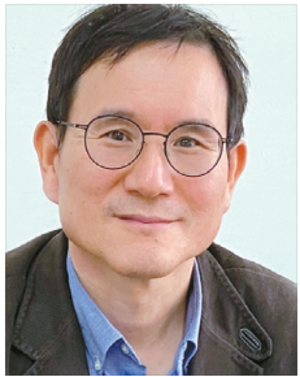
Young-Kwon Hong, PhD
Professor, Department of Surgery, Harvard Medical School, Beth Israel Deaconess Medical Center
Dr. Young-Kwon Hong recently joined the Department of Surgery at Beth Israel Deaconess Medical Center (BIDMC), following his tenure at the University of Southern California, where he served as a Professor and Director of Basic and Translational Research. His research centers on the critical role of the lymphatic system in regulating fluid homeostasis and facilitating the clearance of tissue and cellular waste.
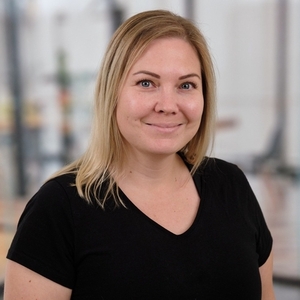
Jenny M. Hogstrom, PhD
Instructor in Medicine, Harvard Medical School
Co-Director, Center for Patient-derived Models for Personalized Medicine, Beth Israel Deaconess Medical Center
Jenny M. Hogstrom is an Instructor in Medicine at Harvard Medical School and co-director of the Center for Patient-derived Models for Personalized Medicine at Beth Israel Deaconess Medical Center. Dr. Hogstrom completed her PhD training at the University of Helsinki, Finland where her research focused on utilizing organoid cultures to understand gene regulation in intestinal stem cells during initiation and progression of colorectal cancer. After receiving her PhD in 2019, she joined Dr. Taru Muranen's laboratory at BIDMC to investigate how the crosstalk between the tumor microenvironment and cancer cells drives resistance to endocrine therapies, and how metabolic perturbations stimulate resistance in hormone receptor-positive breast cancer. Dr. Hogstrom's current research focus is to develop novel patient-derived models of breast cancer to investigate how the metastatic tumor microenvironment induces adaptive resistance to standard-of-care therapies.
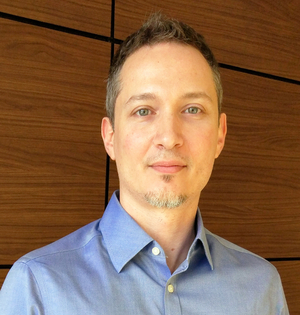
Ioannis Vlachos, PhD
Associate Professor of Pathology, Harvard Medical School
Director, Spatial Technologies Unit
Co-Director, Bioinformatics Core, Beth Israel Deaconess Medical Center
Ioannis Vlachos is Associate Professor of Pathology, Harvard Medical School (HMS), the Director of the Spatial Technologies Unit (www.spatialtechnology.org), and the co-director of the BIDMC Bioinformatics Core. Ioannis is the co-Director of the Bioinformatics Program of the Cancer Research Institute (CRI), a member of the Dana Farber / Harvard Cancer Center, and an Associate Faculty of the Broad Institute of MIT & Harvard.
Dr. Vlachos' research focuses on the optimal use of cutting-edge technologies for reverse translation, including bulk, single cell, and spatial tissue profiling to inform clinical decision making. To this end, his lab is developing and applying novel experimental technologies and AI/ML methodologies for data integration and target or biomarker prioritization. These approaches have brought forward discoveries, patents, and innovations in cancer immunology, inflammatory and fibrotic diseases, and wound healing.
In parallel, the Spatial Technologies Unit is transforming research-focused spatial technologies into robust, automated, and highly repeatable production-grade methods to support targeted investigations or clinical trials. In 2023, Dr. Vlachos co-founded the Global Alliance for Spatial Technologies (GESTALT, www.globalspatial.org), in an effort to bring together the spatial tissue profiling community and to support world-wide efforts for standards in the field.
Dr. Vlachos' work is supported by funding from NIH (R01, P01, U54), DoD, foundations, and collaborations with the industry.
Moderators:

Michael J. Grey, PhD
Staff Scientist, Division of Gastroenterology, Beth Israel Deaconess Medical Center
Assistant Professor in Medicine, Harvard Medical School
Michael J. Grey is a Staff Scientist in the Division of Gastroenterology at Beth Israel Deaconess Medical Center and an Assistant Professor in Medicine at Harvard Medical School. Dr. Grey earned his PhD with Distinction in Biochemistry and Molecular Biophysics at Columbia University, was a postdoctoral fellow in structural biology at Harvard Medical School and completed his mentored scientist career development award in epithelial cell biology in the Division of Gastroenterology at Boston Children's Hospital. Dr. Grey's lab investigates the biochemical, cellular, and physiologic mechanisms underlying how the intestinal epithelium responds and adapts to cellular stress in health and disease. Current projects focus on the function and evolution of epithelial ER stress sensors, host-microbiota interactions regulating epithelial host defense, and the impact of disease-causing mutations on protein structure and cellular function in digestive diseases.
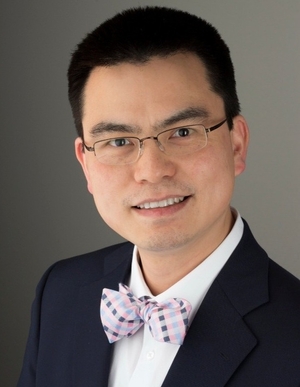
Z. Gordon Jiang, MD, PhD
Physician Scientist in the Division of Gastroenterology and Hepatology
Associate Professor of Medicine, Harvard Medical School, Beth Israel Deaconess Medical Center
Director, BioDataBank Core
Dr. Gordon Jiang is a transplant hepatologist and physician scientist in the Division of Gastroenterology and Hepatology. His lab studies the pathophysiology of steatotic liver diseases, with a focus on metabolic dysfunction-associated steatotic liver disease (MASLD) and alcohol-associated hepatitis (AH) using human-based models. He is also a Co-Lead of the BIDMC Translational Research Hub for Systemic Effects of Metabolic Disease, Co-Director of the BIDMC Biorepository and Data Bank, and Associate Director of the Internal Medicine Physician-Scientist Track at BIDMC.
