

Panel Discussion Session 3
3:45 - 4:45 pm: Artificial Intelligence (AI) in Research Applications
Speakers:
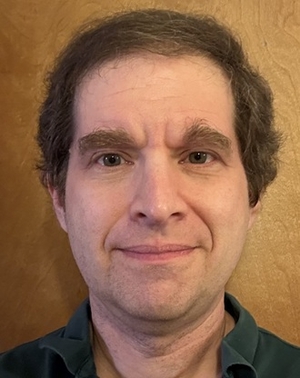
Daniel Goldenholz, MD, PhD, FAES
Assistant Professor, Neurology, Beth Israel Deaconess Medical Center
Principal Investigator, Epilepsy & Data Science Lab
Daniel Goldenholz is an Assistant Professor at Harvard / Beth Israel Deaconess Medical Center, founder of the AAN AI in Neurology Synapse group, Director of the Epilepsy + Data Science Lab, director of the NeuroAI Special Interest Group at BI, and director of the related NeuroAI.Chats VuMedi channel. He completed formal training in electrical engineering, biomedical engineering, medicine, neuroradiology, neurology, epilepsy, clinical neurophysiology, neurostatistics, and health sciences. His lab is responsible for revealing new ideas about placebo effects, seizure diary simulation, clinical trial improvements, seizure forecasting, automating EEG, biosensors, seizure-sleep relationships, 3D-printed educational tools, and harnessing AI for clinical decision support. On a professional and personal level, he hates epilepsy and all the havoc it causes. His work motto is “relentless incremental improvement.”
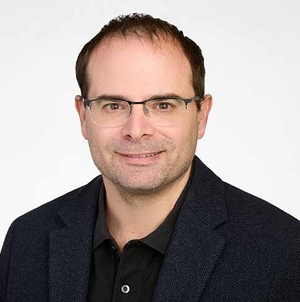
Eyal Klang, MD
Attending Radiologist, Beth Israel Deaconess Medical Center, Harvard Medical School
Founder, BRIDGE GenAI Lab
Eyal Klang is an attending radiologist at Beth Israel Deaconess Medical Center and Co-Director of the BRIDGE GenAI Lab. His work focuses on generative AI in healthcare, including clinical evaluation, safety, reliability, bias, multimodal models, and real-world deployment. He has led and collaborated on research spanning radiology, clinical decision support, large language models, and AI implementation across major academic medical centers.
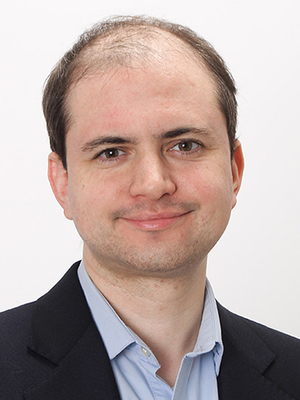
Griffin M. Weber, MD, PhD
Associate Professor of Medicine, Beth Israel Deaconess Medical Center
Associate Professor of Biomedical Informatics, Harvard Medical School
Griffin M. Weber is an Associate Professor of Medicine and Biomedical Informatics at Beth Israel Deaconess Medical Center (BIDMC) and Harvard Medical School (HMS). He is the Director of the Biomedical Research Informatics Core at BIDMC and the Faculty Lead for Harvard Catalyst's Informatics Program. His research involves developing novel computational methods and software programs to analyze electronic health record data. He helped develop the i2b2 platform for query and analysis of clinical data, which is used at BILH and more than 200 other institutions worldwide.
Moderators:
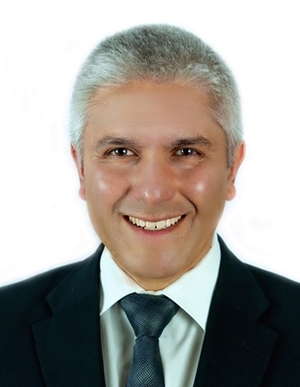
Yuri Quintana, PhD, FACMI, FIAHSI, FAMIA
Chief, Division of Clinical Informatics, Beth Israel Deaconess Medical Center
Assistant Professor of Medicine, Harvard Medical School
Senior Scientist, Homewood Research Institute
Yuri Quintana is the Division Chief of the Division of Clinical Informatics at Beth Israel Deaconess Medical Center, a faculty member at Harvard Medical School, and founder of DCI Network and the DCI Network Blueprints AI Conference. With over 25 years of experience in the field, Dr. Quintana has constructed several large AI-based natural language interface systems, AI-based information filtering systems, and global medical disease registries. His deep understanding of AI and large-scale systems allows him to give attendees insights into best practices and potential pitfalls in the new AI landscape. Dr. Quintana's experience in navigating the complexities of patient-facing systems and international platforms will be particularly valuable for attendees seeking to build and manage their AI projects. He leads the DCI Network (www.dcinetwork.org), which brings together national-level leaders to work on complex health problems requiring collaborations between institutions, government, and the private sector.
He developed InfoSAGE, a mobile app for home-based coordination (infosagehealth.org) for medication and symptom management. He created Alicanto Cloud (www.alicantocloud.com), an online platform for learning and collaboration used by health professionals at Harvard-affiliated hospitals. As a Senior Scientist at Homewood Research Institute in Canada, he has developed new methods to evaluate digital mental health systems using evidence-based approaches. Previously, at St. Jude Children's Research Hospital, he developed Cure4Kids, a global pediatric cancer learning network used by thousands of health professionals, POND4Kids, an international cancer registry, and Cure4Kids for Kids, a mobile app promoting healthy lifestyles for children.
Quintana was a principal investigator in the Canadian HealNet Research Network. He has held high-tech positions at IBM and Watcom. Quintana obtained his engineering degrees from the University of Waterloo in Electrical and Computer Engineering and Systems Design Engineering.
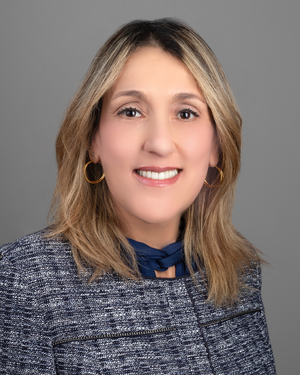
Malika Aid Boudries, PhD
Assistant Professor of Medicine, Harvard School of Medicine
Principal Investigator, Bioinformatics and Computational Genomics and Epigenetics Laboratory
Center for Virology and Vaccine Research, Harvard School of Medicine
Dr. Malika Aid Boudries is an Assistant Professor of Medicine and a Principal Investigator at the Center for Virology and Vaccine Research at Harvard Medical School, where she leads high-impact research at the intersection of Bioinformatics, OMICS technologies, artificial intelligence, immunology, and vaccine development.
Areas of expertise: AI-Driven HIV predictors of rebound following ATI studies in PLWH; AI-Driven Drug Discovery and Next-Generation Vaccine Design; Translational Vaccine Development for Existing, Emerging, and Global Pathogens; Single-Cell Multi-Omics Technologies for Systems Immunology and Immune Profiling; Computational Genomics, Epigenetics, and Bioinformatics for Host-Pathogen Interaction Mechanisms.
