Program Overview & Tracks
Clinical Training
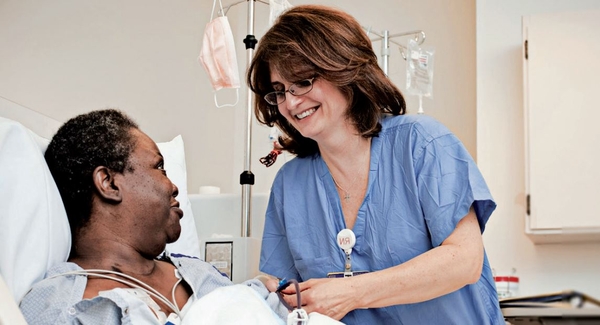
All clinical training takes place at the Beth Israel Deaconess Medical Center in Boston, MA. During the first year of training, each of the four fellows spends six months on the consult service, three months on the dialysis service and three months on the transplant service in alternating one-month rotations. Under the supervision of a renal division faculty member, the fellow coordinates the care of patients with a wide variety of nephrology disorders (acute kidney injury, electrolyte abnormalities and glomerulonephritis, to name a few), provides acute and chronic dialysis to those with urgent or ongoing indications, and manages immunosuppressive medications and potential complications of renal and/or pancreas transplantation. The fellow performs percutaneous kidney biopsies of native and transplant kidneys, places central venous catheters for dialysis and learns to interpret renal pathology and radiology. A simulation center is used to ensure skill in performance of invasive procedures. Throughout the first two years of fellowship, the fellow cares for ambulatory outpatients in a weekly nephrology continuity clinic and participates in transplant clinic while on the transplant service. There are four weeks of vacation in the fellows' first clinical year.
In the first year of the fellowship, a broad array of didactic programs and renal conferences are an integral part of the educational curriculum. Learn more about our conference schedule.
In the second year, the research-oriented fellows spend four weeks on the clinical service and the remaining time in a research laboratory of their choice. The clinically oriented (two-year) fellow spends about eight months on various clinical rotations of their choosing (consult, transplant or dialysis service, pathology and radiology, Children's Hospital or Vascular Access electives) and four months of clinical/QI/educational research supervised by one of the renal division faculty members. During the second year, all of the fellows spend increasing amounts of time in the outpatient dialysis setting. Second-year fellows may also choose to rotate through experiences in urology, diabetic kidney care, kidney radiology, transplant and pediatric nephrology. A rotation at our outpatient vascular access center is also part of the curriculum. There is a four-week vacation allowance in the second year as well.
Subspecialty tracks
The Nephrology Fellowship at BIDMC offers rigorous, world-class training in all aspects of kidney disease, with expert faculty providing comprehensive learning opportunities through hands-on experience, didactic teaching, and clinical conferences within a supportive environment. Read on to learn more about the fellowship tracks we offer, which provide a more focused experience to prepare you for your career ahead.
Transplant Track
While all fellows will spend four months on the inpatient transplant service (with a weekly outpatient clinic experience), a member of the transplant track will gain a well-rounded, intensive experience into the world of renal transplantation. The Transplant Institute at BIDMC is an interdisciplinary group of nephrologists, surgeons, researchers, physician extenders, social workers, dietitians and nurses. These medical professionals will all be a part of your academic work in transplantation, which will supplement additional outpatient clinical work with transplant-related quality improvement projects for both recipients and donors, ongoing clinical research and basic science work in immunology, as desired.
Mentors: Amtul Aala, Bhavna Chopra, Aditya Pawar, Martha Pavlakis
Education Track
Education is among BIDMC's greatest strengths as an institution. In addition to the many educational efforts occurring within the Renal Division, there is a wealth of resources within this hospital-wide culture of education and education research. The Carl J. Shapiro Institute for Education and Research houses a number of organizations and opportunities for further training, including the BIDMC Academy of Medical Educators and a Clinician Educator Track for Fellows. Additionally, Harvard Medical School provides additional training in medical education research through their own Medical Education Research fellowship. As a second-year fellow, we will help facilitate your entry into the program that is most appropriate for you and pair you with a mentor who most closely aligns with your educational interests, either within the division or hospital-wide.
Mentors: Robert Cohen, Melanie Hoenig, Stewart Lecker, Jeffrey William
Quality Improvement (QI) Track
BIDMC has gained a national reputation for its work in the realm of quality improvement. In addition to the multitude of QI projects occurring within the Renal Division, there are numerous opportunities to engage in this hospital-wide culture of QI work and a spirit of continuous improvement in the delivery of patient care. All of our fellows will be involved in a small QI project, as the ACGME requires. As a member of this track, however, your training in QI will go well beyond this, taking advantage of the resources available to us through the Silverman Institute for Healthcare Quality and Safety and numerous
Frequently Asked Questions About Training and Education
Career Preparation
What is provided for fellow education in physiology, pathology, immunology/transplantation, clinical pharmacology, ethics/palliative care, renal imaging? Who provides this education?
Our faculty provides didactic sessions in all these areas. This teaching takes place in real-time at the bedside as well as during noon conferences that are reserved for these topics.
How does the program prepare fellows for the business aspects of subsequent careers including private practice, academics, dialysis unit medical directorship, etc?
We have some didactic sessions with providers in practice and with industry leaders, and are always trying to develop more innovative programs along these lines. Our faculty do have varying experiences in private practice and dialysis unit medical directorship, as well as academics and research experience.
Schedule-related Questions
Do fellows receive funding for extracurricular scholarship, such as attendance at ASN Kidney Week?
Second year and advanced fellows have a travel and educational allowance for attendance at the annual meeting of the American Society of Nephrology or other scientific meetings. First year fellows are the backbone of our hospital coverage during this time. Funds are available for the purchase of textbooks, enrollment in courses or other educational endeavors.
What is the on-call structure for fellows?
During the first year, the four fellows will each take a weeknight of pager (at-home) call – Monday through Wednesday. Faculty takes call on Thursday nights. For Friday through Sunday, each first-year fellow will cover two of the inpatient services once a month (with the other two services covered by a second-year fellow). The fellows covering the weekend share pager coverage. Call schedules are decided amongst the fellows and program leadership. All fellows will have three weekends OFF per month, on average. Holiday coverage is also decided among the fellows.
What is the program’s policy about work-hour restrictions?
We strongly believe that a well-rested fellow is a better doctor! While the first year of fellowship is busy, we acknowledge that there may be times when a fellow is called in overnight to assist in the management of a sick patient and cannot safely stay for another whole work day. When these situations occur, we deal with them on a case-by-case basis. Collegiality is in the fabric of our fellowship and both attendings and co-fellows will find a way to get you home to rest.
Pathologists and APPs
Is there an on-site pathologist with expertise/fellowship training in renal pathology? Are renal biopsies (native and transplant) read in-house or sent out? Do fellows and faculty review biopsies directly with the pathologist? How soon after a biopsy is this available?
All renal pathology is done on-site by our renal pathologists Drs. Rosen and Henderson. Fellows review all biopsies with our pathologists in small groups or one-on-one at multi-headed teaching microscopes, usually one to two days following the procedure. Many are presented at our weekly conference as well with a pathologist present to present the biopsy findings.
If fellows rotate to more than one hospital, who are the supervising faculty at each?
During the first year, all work is done at the main hospital (BIDMC in Boston). In the second year, there is the option to spend outpatient time at the Joslin Diabetes Center and optional exposure to pediatric nephrology at Children’s Hospital Boston, a world-renowned hospital located just down the block from BIDMC in the Longwood Medical Area.
Does the program use physician extenders such as advanced practice nurses or physician assistants? What is the responsibility/relationship of the fellows to these providers?
Our Renal division does employ two nurse practitioners who specializes in nephrology and dialysis. They help to manage anemia treatment, outpatient clinic, peritoneal dialysis and a cohort of inpatients.
Graduate Medical Education Resources
How can I learn more about the benefits and resources available to BIDMC trainees?
Please visit the Carl J. Shapiro Institute for Education and Research website, where you will find a page dedicated entirely to employment benefits, wellness resources, family resources, career resources, and housing/transportation for all trainees at BIDMC.
Procedure Experience
What simulation experiences do fellows participate in?
At the beginning of the first year, we have simulation sessions in performing renal biopsies, and troubleshooting the dialysis procedure itself. We offer an opportunity to train in hemodialysis catheter placement, at a fellow's request.
What is the educational program and clinical experience of fellows in vascular access?
We have a vascular access center on-site that performs procedures (fistulograms and thrombectomies), and through which, fellows rotate in their second year.
Dialysis Experience
What is provided for fellow education in the principles, practice and technology of dialysis?
We have a dedicated renal replacement therapy curriculum that runs over the course of the year. Much of our clinical faculty is well versed in all modalities of dialysis, including conventional intermittent hemodialysis, home hemodialysis, peritoneal dialysis and continuous renal replacement therapies for ICU patients.
How many in-center hemodialysis, peritoneal dialysis, and home hemodialysis patients are cared for by the fellow
Approximately 250 HD patients, 40 PD patients, 15 home hemodialysis patients. Fellows experience outpatient dialysis in their second year because our main HD site is one mile from our hospital and, as such, difficult to schedule into daily activities in the hospital. Our core faculty precept fellows in the dialysis experience during their second year.
Transplant Experience
Are kidney transplants done at the program’s hospital? If so, how many transplants are done per year
Approximately 75-100 / year. All care is co-managed with our transplant nephrologists and transplant surgeons who have a great working relationship. While on the inpatient transplant service, our fellows are exposed to immediate post-transplant care for recipients, acute complications such as graft rejection/failure, adverse effects of immunosuppression and transplant-related infectious diseases. In the outpatient transplant nephrology clinic, both pre- and post-transplant patients are evaluated. Additionally, all first-year fellows participate in transplant curriculum led by our experienced faculty. Our Transplant Institute also offers an ATS-accredited renal transplant fellowship following a general nephrology fellowship.
ICU Experience
What is the ICU clinical experience provided?
Approximately 60 ICU beds. Approximately 5-15 ICU patients covered by the inpatient renal teams at any given time. We have 6 CRRT machines with most in use at most times. We do not have a dedicated ICU nephrology faculty or rotation. The ICU patients are dispersed among the consult, dialysis or transplant services, depending on their renal history. We have renal faculty in our Division with a focus in ICU nephrology.
Outpatient Continuity Clinic Experience
What types of patients are seen by fellows during their continuity clinic experience? What is the fellow's role.
Continuity clinic: longitudinal experience, one afternoon/week over the first two years of fellowship. Each fellow is partnered with one of the core clinical faculty for the entire experience (same faculty for both years). The fellow develops independence over the first year to the point where they primarily manage patient care in their second year.
What is the experience with the care of kidney diseases in specific populations?
Approximately 10. Fellows are primarily in the continuity clinics. Some clinics (e.g. transplant, diabetes) are attended by fellows as elective experiences in their second year.
How many general nephrology clinics are there per week other than fellow continuity clinics?
As one of five major teaching hospitals in the surprisingly small Boston metro area, it is difficult to attract enough patients of any one kind to perpetuate a focused renal specialty clinic. All of the above areas are represented in our general nephrology continuity clinics. As such, no matter who your clinic preceptor is, you will see a large variety of renal diseases.
Clinical Elective Experiences
What is the experience provided in interpretation of urinalysis, renal imaging and renal pathology?
Urinalysis: daily performance with faculty, and then independently. Imaging: dedicated rotations in the second year, if desired. Pathology: see prior question above under “Resources.” Every second-year fellow will complete a rotation with our renal pathologists in which the fellow “reads-out” renal biopsies with renal pathology faculty supervision.
What is the educational and clinical experience provided in plasmapheresis? Who supervises the clinical experience?
The Pheresis service is run by Hematology-Oncology at our institution, but they are very welcoming to involving us in the care of our patients. There is an opportunity to learn and manage pheresis therapy during the 2nd year of training as an elective.
Does the program offer a renal Palliative Care didactic and/or clinical experience?
Yes. There are didactic experiences and a one-day communication workshop developed by Dr. Robert Cohen in which these issues are addressed and specific skills modeled/practiced.
