Nephrology Fellowship
Nephrology Fellowship Programs
Nephrology Training
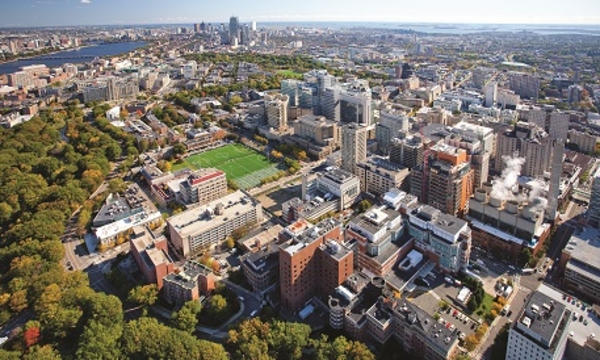
The Nephrology Fellowship at the Beth Israel Deaconess Medical Center immerses trainees in an environment rich in opportunity for rigorous world-class training in all aspects of kidney disease while maintaining a nurturing and supportive environment. Our faculty provide state-of-the-art care for patients with acute and chronic kidney diseases, renal failure requiring replacement therapy with dialysis and kidney transplantation, inherited and developmental kidney disease, and complicated acid-base and fluid/electrolyte problems. Our trainees become expert in all areas of Nephrology by working side-by-side with faculty, attending robust didactic teaching, and clinical conferences from experts within the Harvard community and beyond.
Division of Nephrology History
Decades before Boston's Beth Israel and New England Deaconess hospitals came together as Beth Israel Deaconess Medical Center, each was a leader in health care with a long history of personalized patient care and community service. In 1996, the two hospitals merged to form BIDMC. Today, with nearly three quarters of a million patient visits each year in and around Boston, BIDMC is rated among the top hospitals in the country in patient care and National Institutes of Health funding. Like BIDMC, the Division of Nephrology has a rich and remarkable history, boasting an impressive lineage of members and leaders.
When the Harvard Medical Service at Boston City Hospital closed, nephrologists at the Thorndike Laboratory—led by Franklin Epstein, one of the “fathers of nephrology”—joined the Beth Israel Hospital Renal Unit, then directed by Howard Frazier. When Dr. Epstein became Chief of Medicine in 1975, the unit grew considerably under his leadership and that of Robert S. Brown and Patricio Silva (Acting Chiefs of clinical and research activities, respectively). In 1981, Dr. Epstein returned to his nephrology roots as the Chief of the Division. Vikas Sukhatme took his place in 1992, and four years later guided Nephrology through the merger between Beth Israel and New England Deaconess Hospitals. The current division formed in 1999, when Joslin Diabetes Center’s Renal Division joined BIDMC’s. After Mark Zeidel, Chairman of Medicine, served as Acting Chief from 2007 to 2010, Martin Pollak became Chief of Nephrology; and, in 2014, following Robert Brown’s 40 years of service, Bradley Denker assumed the position of Clinical Chief. Our training program in academic nephrology is supported in part from an NIH T32 grant that has been active for the past 40 years. Dr. Stewart Lecker has been the Program Director since 2008 and was joined by Dr. Jeffrey William as the Associate Program Director in 2018.
Our educational programs are among our program's greatest strengths. Our faculty are recognized locally, nationally and internationally for their excellence in medical education. They serve as core educators in our fellowship program, BIDMC's Internal Medicine Residency Program and at Harvard Medical School. Our educational mission is to train the future leaders of nephrology. The nephrology training program at BIDMC offers a dynamic mix of clinical care as well as basic and translational research, using novel educational approaches in a warm and nurturing environment. Whether our trainees provide superlative care, perform clinical or laboratory research or take on educational roles, our fellowship program provides the tools necessary to chart the future of our specialty.
Program Overview
The Division of Nephrology offers rigorous clinical and research training with specialized tracks in basic science, clinical research, transplantation, education, quality improvement, and interventional nephrology, guided by expert mentors. Fellows gain focused experience in their chosen areas, preparing them for leadership roles in nephrology.
Research Opportunities
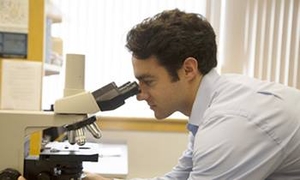
For fellows in the research track, a third year of full-time bench or clinically oriented research is expected, funded by our NIH T32 Training Grant. During this year, there are no clinical requirements; however, some fellows elect to serve for a short time as junior attending physicians on the nephrology consult service under the supervision of a senior nephrologist.
Conferences
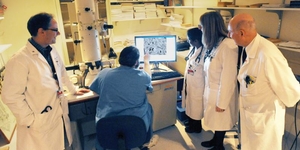
The Nephrology Fellowship offers a comprehensive series of weekly and monthly didactic programs, including journal clubs, renal grand rounds, and specialized curriculums on dialysis, transplant, and electrolytes. Fellows present and discuss cases regularly, engage with renowned experts, and participate in conferences that integrate clinical practice with research and quality improvement.
Renal Transplant Fellowship
The Transplant Nephrology Fellowship, certified by the American Society of Transplantation, offers a tailored clinical curriculum with six months of inpatient service, outpatient clinics, transplant biopsies, and observation of transplants, along with one month in pathology and histocompatibility labs. The program also includes guided research, didactic conferences, and participation in national studies such as the APOLLO Network to address racial disparities in kidney transplant outcomes.
Clinical & Research Programs & Laboratories
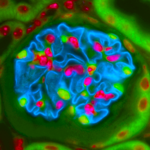
The Department of Nephrology supports various innovative programs advancing kidney disease research and treatment, allowing fellows to participate in award-winning initiatives like GlomCon and the HMS Pathways curriculum. Notable achievements include Dr. Bud Rose's development of UpToDate and the educational GlomCon Trivia, along with the TORCH program, which brings critical renal care to Haiti.
The Burton D. Rose Grants for Education Innovation
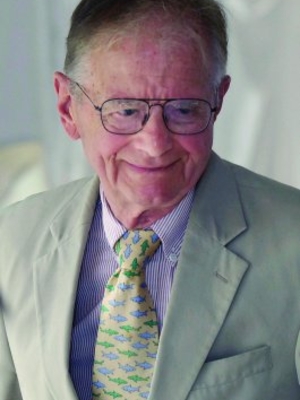
In honor of Dr. Bud Rose, nephrologist, former member of our division, and creator of UpToDate, his wife Gloria Rose has established a dedicated fund for nephrology fellows to complete academic projects. These grants will help provide extra support to the innovative work being done by our fellows during their 2nd and 3rd years of fellowship.
Apply to the Nephrology Fellowship
The Nephrology Fellowship offers four ACGME-certified positions annually, including a three-year research track and a two-year clinical track, with applications accepted through ERAS starting in July. A separate transplant nephrology fellowship is also available, with applications reviewed on a rolling basis; letters of reference are required for both programs. Learn more about the application process.
